
Last updated September 20, 2026
Full 25-point door and opener safety check with every visit - springs, cables, rollers, tracks, and your LiftMaster or Chamberlain opener included
You get a price before we start. It does not change when the truck arrives.

 Before
 After
After Before
 After
After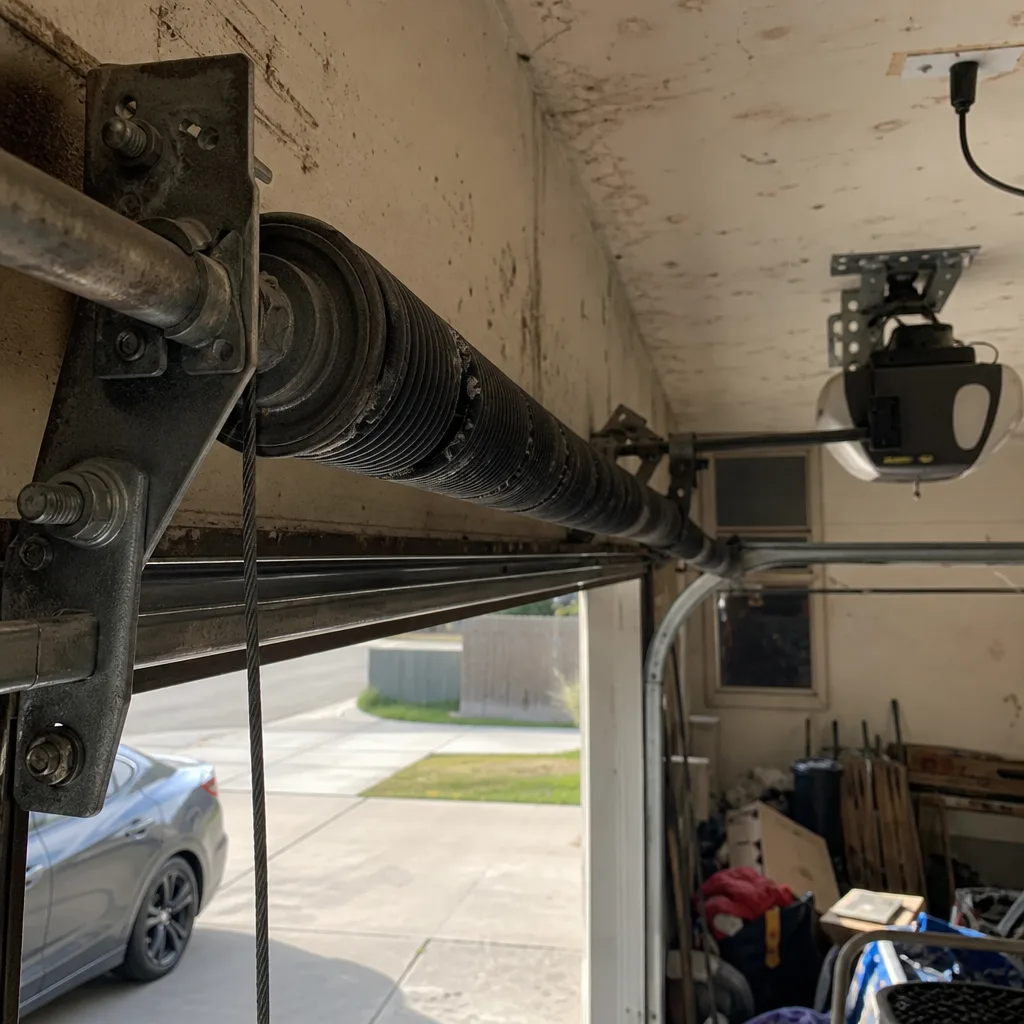 Before
 After
AfterDIY vs Professional Garage Door: The Fontana Homeowner’s Decision Guide
A torsion spring stores roughly 200 foot-pounds of torque when wound. That’s enough stored energy to throw a steel winding bar through drywall, shatter a forearm, or worse. In Fontana, where summer heat cycles through the 90s and 100s from June through September, that spring has been expanding and contracting for years, accumulating metal fatigue you cannot see from the outside. This guide is not a lecture about staying in your lane. It’s a task-by-task breakdown of which garage door jobs a competent Fontana homeowner can safely handle, which ones require a licensed technician, and what the actual math says about cost, tools, insurance, and resale. For a deeper look at pricing, see our Garage Door Cost Breakdown: The Fontana Homeowner’s Reference for 2026. By the end, you’ll know exactly where the line is, and why that line exists in the first place.
Quick Answer
Most garage door maintenance tasks in Fontana, like replacing weatherseal, lubricating rollers, or tightening hinge bolts, are safe for a careful DIY homeowner with basic tools. But any work that involves torsion springs, lift cables, or opener force calibration should be left to a professional, no exceptions. The dividing line is stored mechanical energy: if the part you’re touching is under tension, the risk of serious injury is not hypothetical.
Table of Contents
- The Real Divide: Stored Energy, Not Skill
- Task-by-Task Matrix: What’s Safe, What Isn’t
- The Tool Math: What Legitimate Spring Work Actually Costs You
- The YouTube Gap: What Tutorials Don’t Teach You About Fontana Doors
- Insurance and Liability: When the Handyman’s Price Is Too Low
- The Paper Trail: Documentation and Your Home’s Resale Value
- DIY Jobs Worth Doing: A Practical List with Step-by-Steps
- Common Mistakes to Avoid
- When to Call a Professional
- Frequently Asked Questions
BeforeAfterThe Real Divide: Stored Energy, Not Skill
We need to dispense with the framing that DIY versus professional garage door work is about how handy you are. It’s not. A master carpenter who has framed three houses can still be killed by a torsion spring. The reason is physics, not competence.
A torsion spring does one job: it counterbalances the weight of your garage door, which in Fontana typically runs 150 to 250 pounds depending on whether you have a single steel door or a double-wide with insulation. The spring stores that counterbalance force as rotational tension. When the door is closed, the spring is wound. When it opens, that tension releases in a controlled way. When a spring breaks mid-cycle, the release is uncontrolled, and the door becomes dead weight attached to cables that are no longer symmetrical.
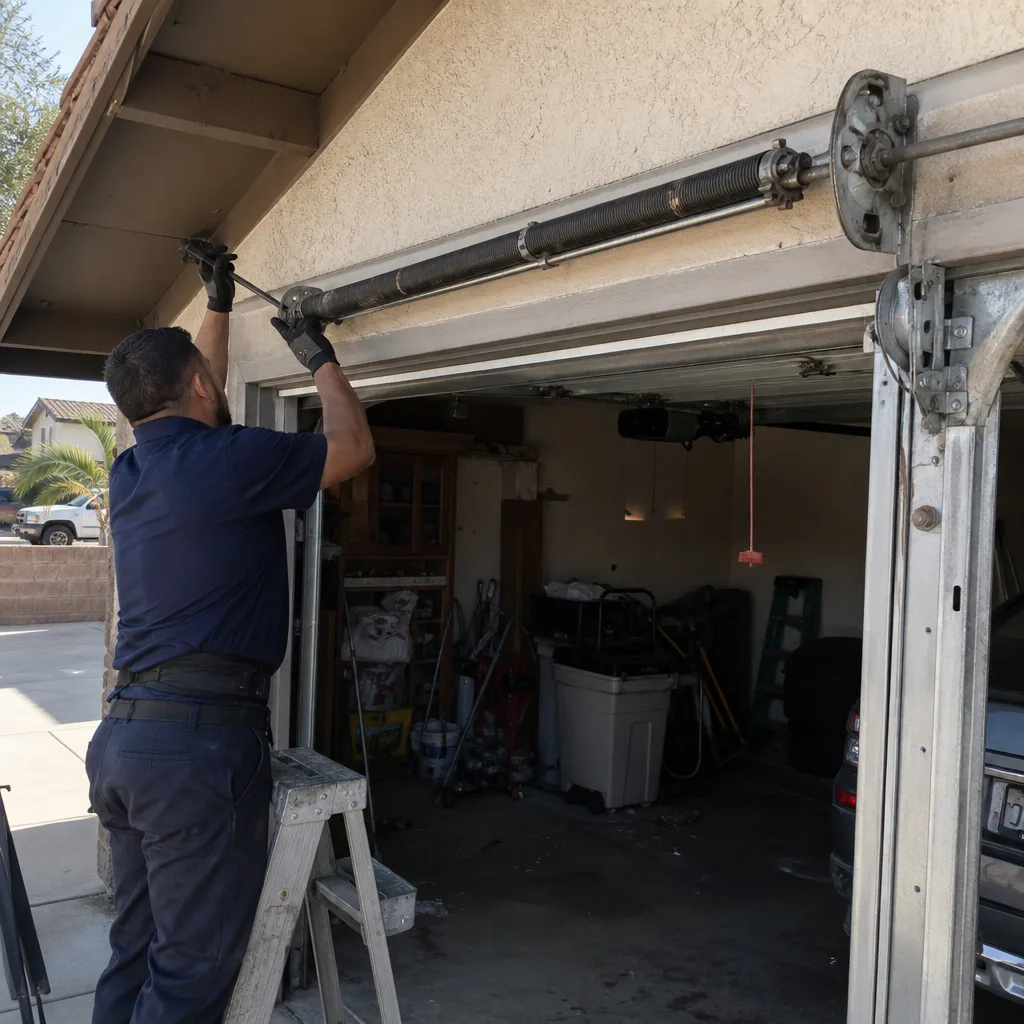
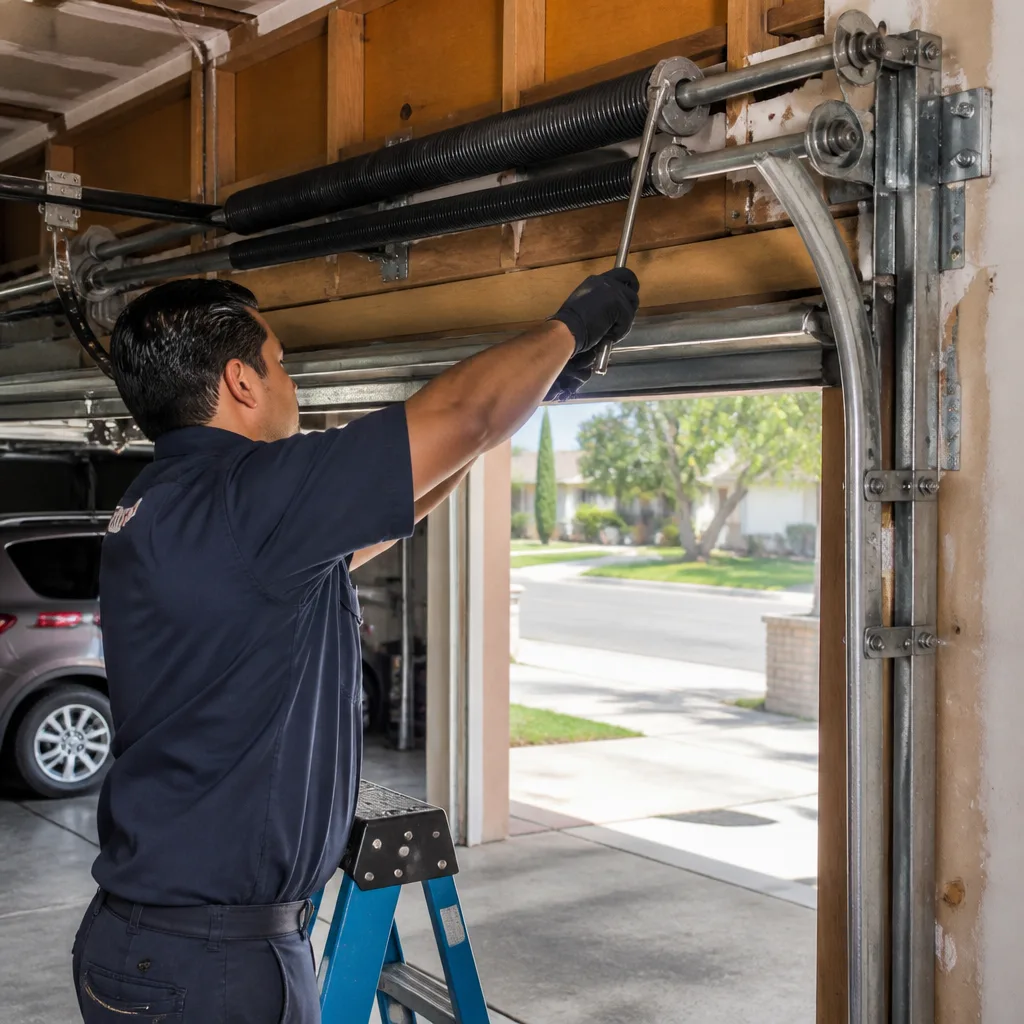
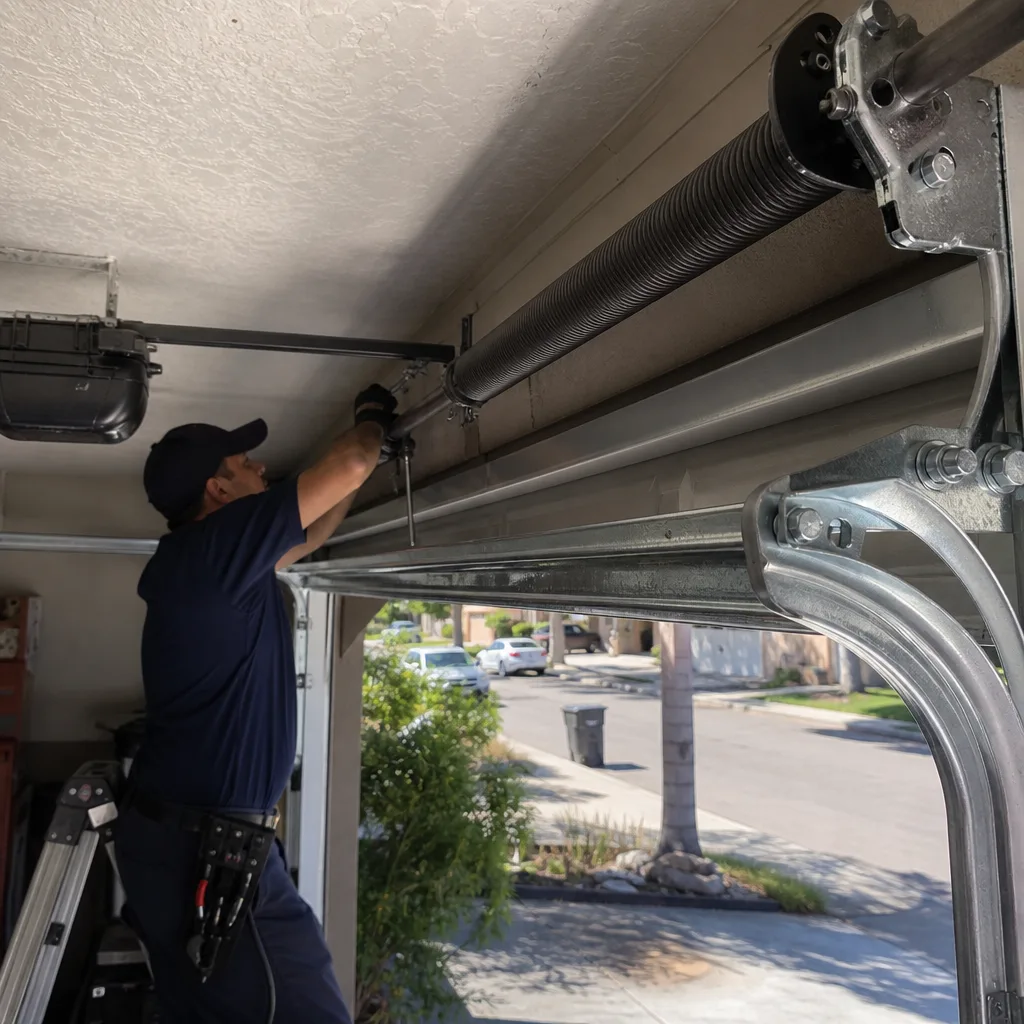
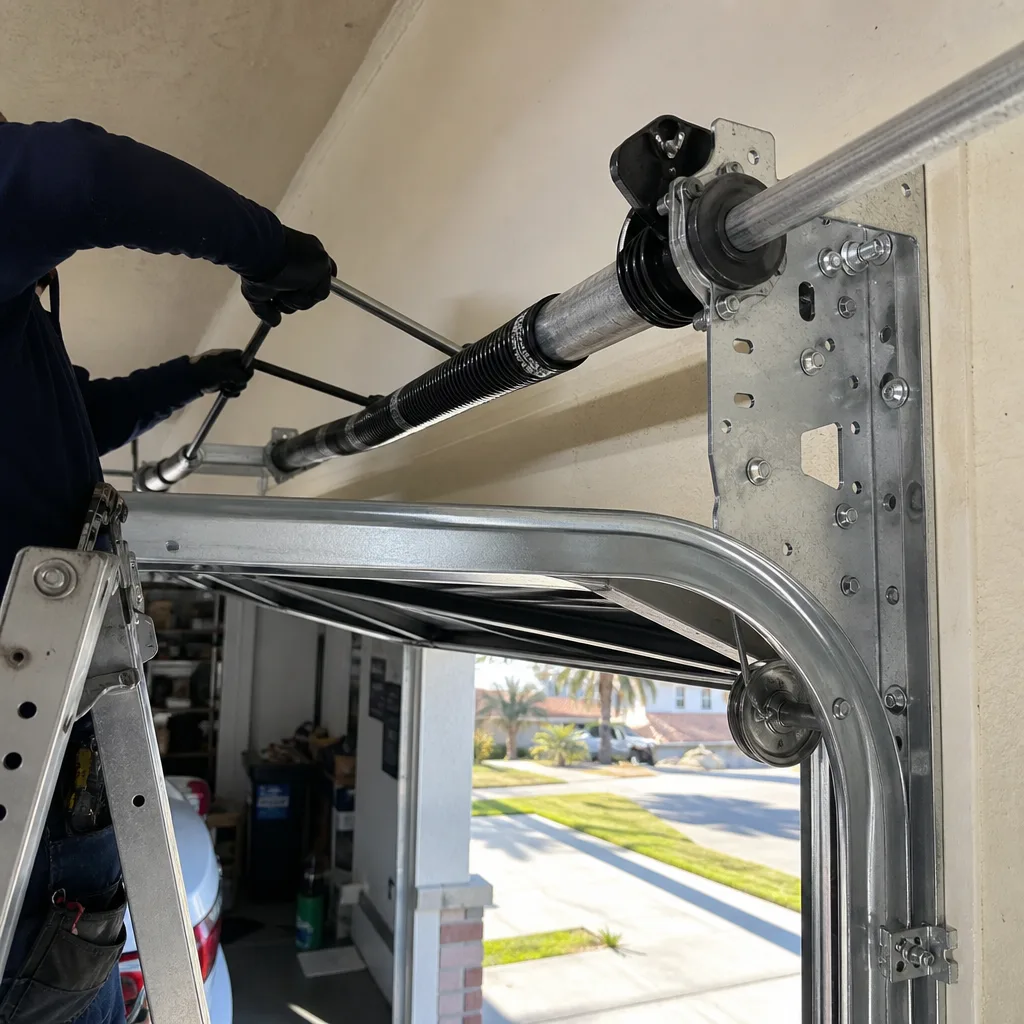
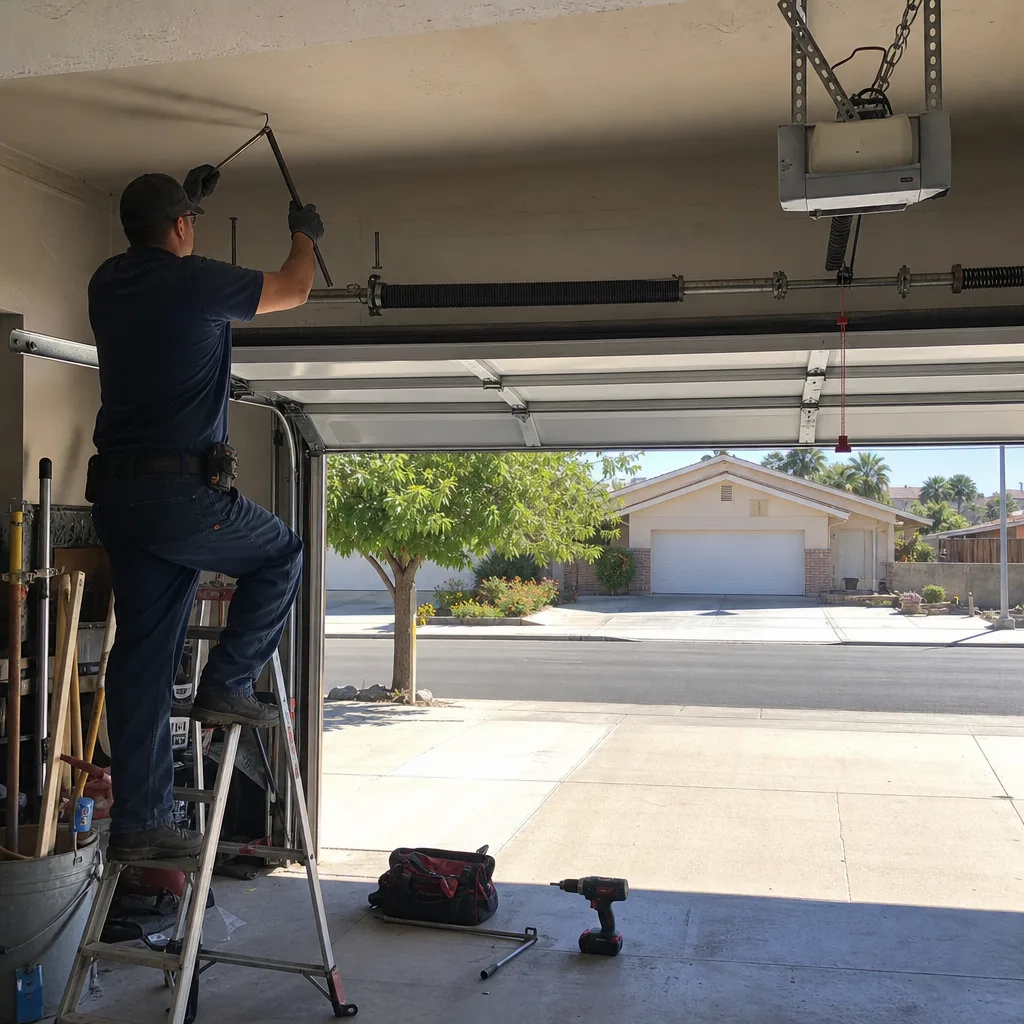
This is where the risk concentrates. On a torsion spring system, the spring sits on a shaft above the door. The winding cone has four slots, and a technician uses two steel winding bars, never screwdrivers, to add or release tension a quarter-turn at a time. A slip at full wind, with roughly 200 foot-pounds loaded, turns that bar into a projectile. Every experienced garage door technician in Fontana knows someone who has a story: the bar through the ceiling, the broken wrist, the narrow miss. It is the one component where the professional recommendation is not a cost-benefit calculation. It’s a hard stop.
Extension springs, found on older Fontana homes with one-piece tilt-up doors, are less commonly fatal but still dangerous. They stretch along horizontal tracks and store force as linear tension. A failed extension spring can snap a cable and send the spring itself flying across the garage. The rule holds: if it’s a spring, do not touch it.
Every other component on the door is a calculation. Rollers are a calculation. Weatherseal is a calculation. Even a bent track can be, depending on the severity. This guide walks you through each one.
Task-by-Task Matrix: What’s Safe, What Isn’t
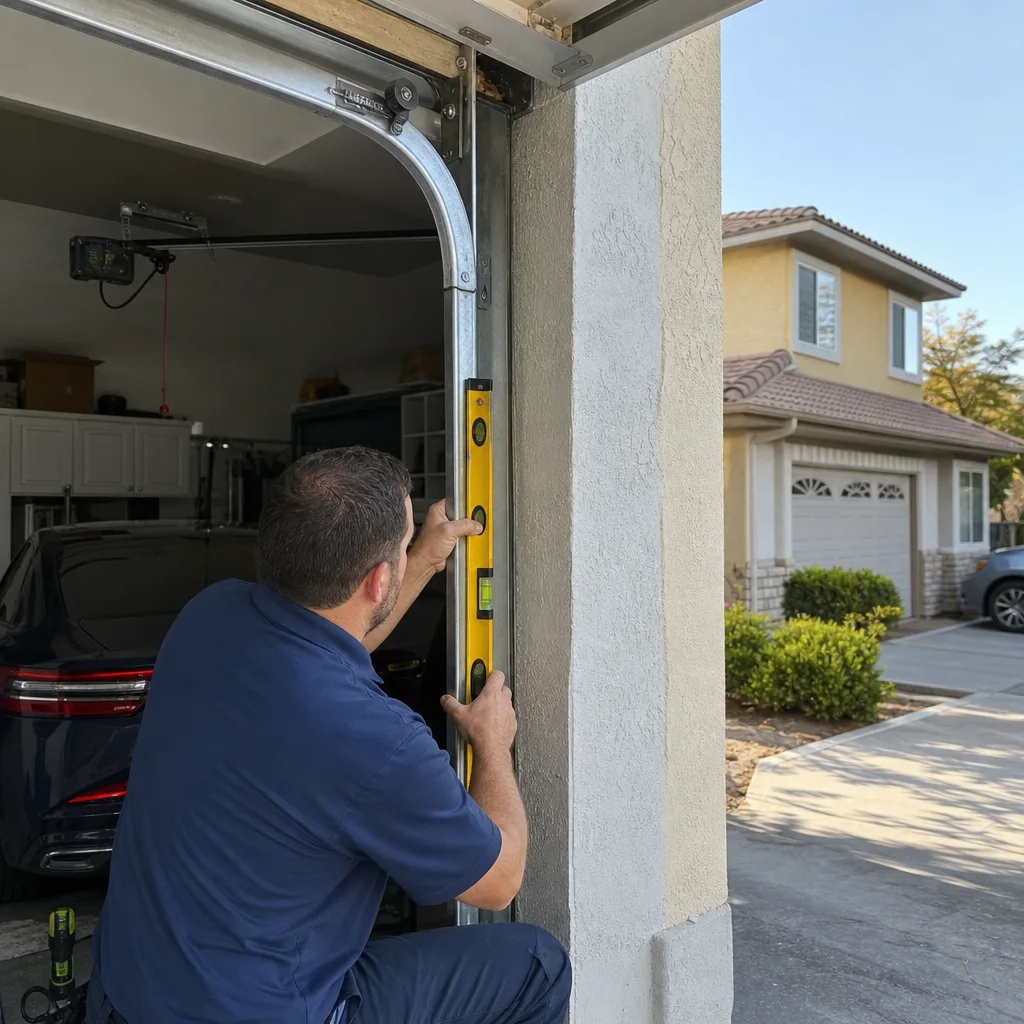
The table below lays out the most common garage door repairs we see across Fontana, from the Etiwanda foothills down to the Jurupa border, and where each falls on the DIY spectrum. The determining factor is whether the task involves stored energy or a component whose failure causes uncontrolled motion.
Safe for a Careful Homeowner
- Weatherseal replacement (bottom seal and perimeter strips): This is the most common DIY job we see done well. The old seal pulls out of the retainer channel, the new one slides in. No springs involved. No cables. A utility knife and a rubber mallet handle it. In Fontana, the summer heat bakes the rubber to a crisp within three to five years, so this is a recurring task.
- Lubrication of rollers, hinges, and springs: A white lithium spray or silicone-based garage door lubricant, applied twice a year, will extend the life of moving parts. This is about as low-risk as garage door work gets. Do not use WD-40; it’s a solvent, not a lubricant for this application.
- Tightening loose hinge bolts and bracket screws: Vibrations from thousands of open-close cycles loosen hardware over time. A socket set and ten minutes will address it. Use a thread-locking compound if the same bolt loosens twice.
- Cleaning and aligning photo-eye sensors: If your opener reverses for no reason, the safety sensors at the bottom of the track may be dirty or bumped out of alignment. Wipe the lenses, check the small indicator lights, and gently reposition. No mechanical disassembly required.
- Roller replacement on extension spring doors (with the door fully open and locked): This is the grayest of the gray areas. If your door has extension springs and you can lock the door in the fully open position so the springs are at minimum tension, replacing a nylon roller with a bent stem is doable. If your door has torsion springs, do not attempt this. The bottom bracket on a torsion door is under cable tension even when the door is up.
Requires a Licensed Technician
- Torsion spring replacement or adjustment: Unambiguous. The winding, unwinding, and replacement of a torsion spring is the single most dangerous residential repair in American housing, and the statistics are stable year over year. In our experience across Fontana, a snapped torsion spring is the most common emergency call we receive in July and August, when heat expansion meets years of accumulated fatigue.
- Lift cable replacement: Cables run from the bottom brackets, around pulleys, and terminate at the spring assembly or anchor brackets. When a cable frays or snaps, the door’s weight is no longer distributed, and the remaining cable takes the full load. Replacing it requires releasing tension that is holding the door in place. That is professional work.
- Opener force calibration: The force setting on your opener is a safety device, not a convenience feature. If it’s set too high, the door will not reverse when it hits a child, a pet, or a car bumper. Federal safety standards mandate that an opener must reverse on contact with a 2×4 block lying flat under the door. Testing and adjusting this requires understanding the relationship between the opener’s logic board, the force adjustment dials or digital settings, and the door’s physical balance. Getting it wrong creates a liability that follows you.
- Panel replacement on a torsion door: Replacing a dented bottom panel requires removing the door sections that sit below it, which means releasing the cable tension that holds the door stack. Not a weekend job. Not safe.
- Track replacement or major track realignment: A track that has come loose from the wall bracket needs to be re-secured while the door’s weight is supported. The vertical tracks carry rollers, and the horizontal tracks carry the door when open. A track failure can drop the entire assembly. This is a two-person job with the right equipment.
The Tool Math: What Legitimate Spring Work Actually Costs You
Let’s run the numbers honestly, because most “just do it yourself” garage door spring advice conveniently omits the equipment cost. These are real range prices for what you’d need to buy or rent to do a torsion spring replacement safely in Fontana.
Tool and Equipment Cost for One Torsion Spring Job
- Torsion spring winding bars (pair): $25-$45. These are not rebar. They are heat-treated steel rods machined to fit the winding cone. Using anything else is the most common cause of injury in DIY spring attempts.
- Replacement torsion spring set (matched pair): $75-$180 depending on wire diameter, spring length, and inside diameter. The correct spring is matched to the door’s weight and height. Guess wrong and the door will be unbalanced, which will destroy the opener.
- Torque wrench (for verifying drum set screws): $40-$110 if you don’t already own one.
- Garage door scale (for weighing the door): $25-$40. You need the door’s actual weight to select the right spring. A bathroom scale does not work here.
- Vise grips and cable clamps: $20-$60 for suitable ones.
Total DIY cost for one spring replacement: $185-$435 in tools and parts, plus the cost of your time, plus the risk of trial-and-error on a component where error is dangerous.
Professional cost in Fontana: A torsion spring replacement in the Inland Empire typically runs $280-$420 installed, with the spring matched to your door’s measured weight and height, the drums reset, the cables re-tensioned, and the opener force tested afterward. The breakeven on a single job favors the professional in nearly every scenario, and the professional carries the liability.
The tool math only favors DIY if you plan to replace springs on multiple doors repeatedly, which is a career choice, not a homeowner scenario.
At Servo Garage Doors Fontana, the spring cost is part of a flat, written price delivered before any work begins, per Clause 1 of The Haven Standard. You see the number and the scope, and you agree to it before a winding bar is picked up.
The YouTube Gap: What Tutorials Don’t Teach You About Fontana Doors
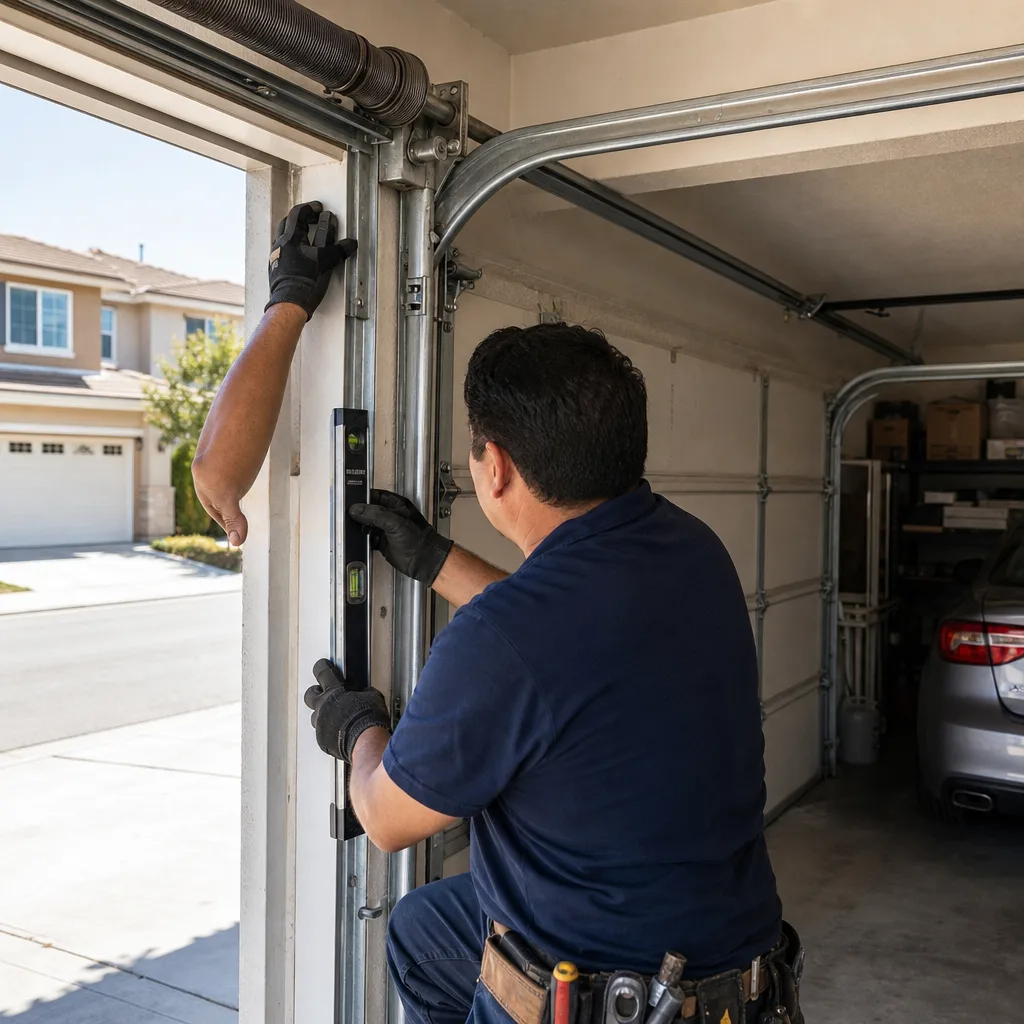
A 12-minute video can walk you through the winding procedure. It cannot do any of the following:
- Tell you your door’s actual weight. A spring is not “standard.” It is matched to a specific door weight and height. A 16×7 steel door weighs more than a 16×7 vinyl-back door, which weighs more than a 9×7 single. Getting the wrong spring means the door flies open or slams shut, damaging the opener and the hinges.
- Account for Fontana’s heat. Steel conducts thermal energy. Springs installed in March behave differently by July. A spring that was marginally too light in winter becomes dangerously inadequate when the door expands and stiffens in 105-degree heat. We see undersized springs fail early throughout the summer months across the city.
- Show you what a fatigued spring looks like before it breaks. A spring nearing failure often shows a gap in the coil or rust pitting at a specific point. That diagnosis comes from seeing hundreds of them, not from a single video.
- Prepare you for the door that’s not level. Video tutorials assume a square, plumb, properly installed door. Most Fontana homes built between 1990 and 2015 have settled, which means the door frame is not perfectly square. The spring work becomes secondary to the track alignment, and the video doesn’t cover it.
- Explain what happens when the winding cone strips. If the cone’s set screws have been overtightened in a previous repair, the threads can strip mid-wind. The bar loses purchase, and the spring releases. This is where injuries happen. A technician recognizes a suspect cone by feel and sound before applying load.
Then there’s the insurance question. If you replace a torsion spring yourself in Fontana and it fails four months later, sending the door down onto your car, your homeowner’s insurance claim will include a question about who performed the repair. The adjuster is not being nosy. Unlicensed, unbonded, unperformed work is a standard policy exclusion in many California homeowner policies. “I watched a video” is not a documented repair. The claim gets reduced or denied, and your premium takes the hit anyway.
This is not a scare tactic. It’s what “I’ll just do it myself” looks like on the claim form.
Insurance and Liability: When the Handyman’s Price Is Too Low
Fontana has no shortage of unlicensed repair technicians who will offer to replace a garage door spring for $80 cash. Here’s what that price actually means under California law.
California requires any contractor performing work valued at $500 or more in labor and materials to hold a state contractor’s license. But even under that threshold, unlicensed repair work on a garage door creates a specific liability structure. If the unlicensed worker is injured on your property while performing the repair, your homeowner’s insurance is the first payer. The worker has no workers’ compensation. Their medical bills, their lost wages, and any resulting lawsuit become your claim. Premiums rise. In some cases, coverage is dropped.
This is not theoretical. It happens regularly with unlicensed handymen performing spring and cable work, which is exactly the work most likely to cause injury. The $80 quote becomes a $30,000 medical claim against your policy, and the unlicensed technician has no bond and no insurance to absorb any of it.
The licensed contractor path works differently. A licensed operator in California carries workers’ compensation for anyone on the job. They carry liability insurance. And they answer to the Contractors State License Board if something goes sideways. When you hire a company like Servo Garage Doors Fontana, which is independently owned and operated under The Haven Standard, the license number is on the page, the insurance is verifiable, and the technician who arrives is background-checked and uniformed with their name on the paperwork.
For a shopping comparison: the $80 spring job from an unlicensed worker versus a $350 documented repair from a licensed contractor is not an apples-to-apples savings. The $80 price excludes insurance, excludes liability, excludes warranty, and excludes the paper trail. You’re not paying less. You’re paying in a different currency, and the exchange rate is terrible.
The Paper Trail: Documentation and Your Home’s Resale Value
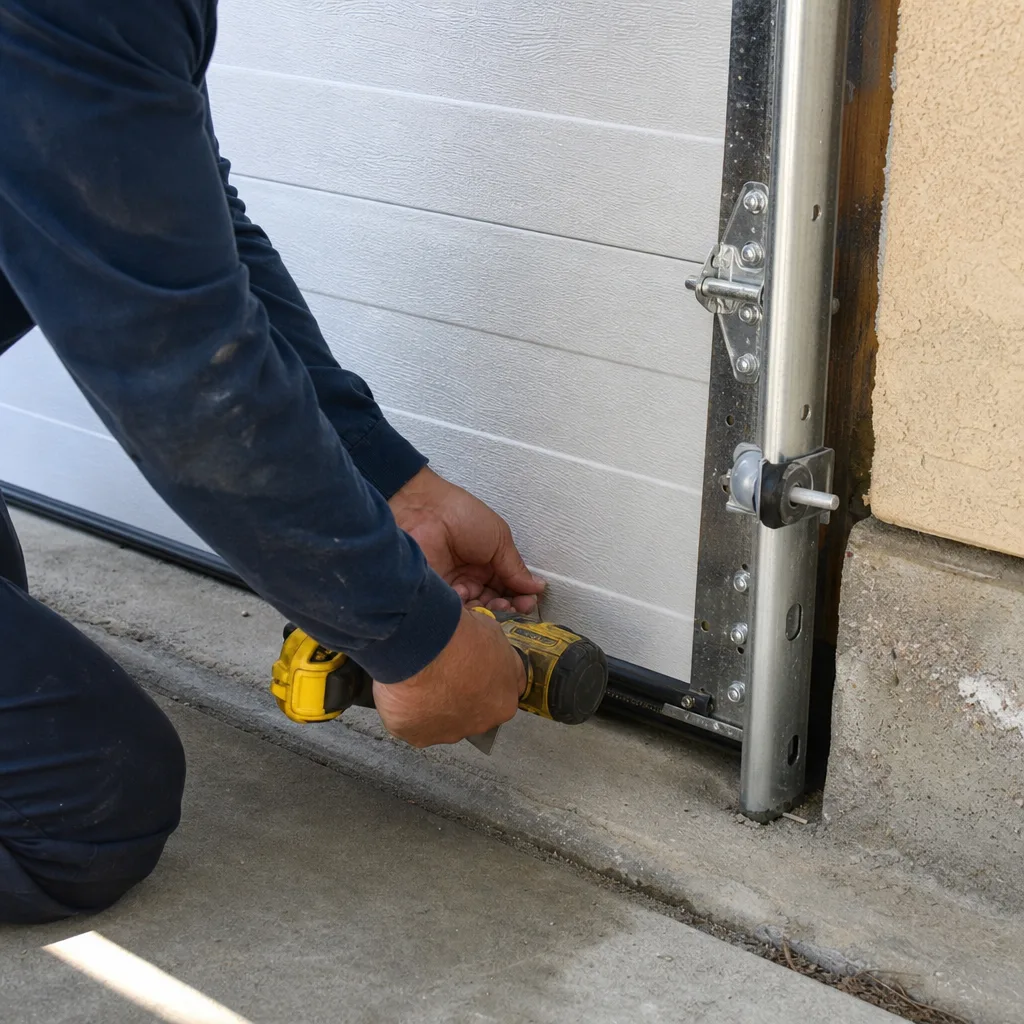
When you sell a Fontana home, the buyer’s inspector will spend roughly 20 minutes on the garage. They’ll check the door balance, the reversal mechanism, the rollers, the cables, and the condition of the springs. If they find problems, you’re either negotiating the sale price down or paying for repairs before closing. This is a bad time to discover that the spring you replaced yourself four years ago was the wrong size and the door never balanced correctly.
Documented professional work changes the dynamic. A buyer who receives a folder with a written scope, the flat price paid, and a photo record of the work completed is a buyer who does not have to wonder what’s behind the drywall. That folder is an asset. It says: this home was maintained by people who kept records.
Clause 4 of The Haven Standard exists for exactly this. Every job closes with a documented photo record: what was found, what was replaced, what it looked like when the technician left. You don’t have to describe the condition of your own garage door from memory in an insurance claim or a sale disclosure. You have photos, taken by someone who does this daily.
The same principle applies to smaller work. A weatherseal you install yourself is fine, but the receipt for the seal and a photo of the finished job is a 90-second addition that preserves the record. The habit matters as much as the repair.
DIY Jobs Worth Doing: A Practical List with Step-by-Steps
If you want to do some of your own garage door work in Fontana, these are the jobs where the effort is worth the savings, and the process is straightforward. For a complete schedule, see our Garage Door Repair Maintenance Checklist for Fontana Homeowners. None of them touch springs or cables. Follow the steps, and you’ll save $100-$400 a year in service fees.
1. Replace the Bottom Weatherseal
- Close the door fully and unplug the opener. You want the door at rest on the ground.
- Pull the old seal from the aluminum retainer channel at the bottom of the panel. It may be glued, stapled, or simply friction-fit. A pair of pliers will make the pull easier.
- Measure the width of the door and cut the new seal to length with a utility knife. Leave half an inch extra on each side; it will compress into place.
- Feed the new seal into the channel from one end, working the T-shaped or beaded edge through the groove. Spray the channel with silicone lubricant if it’s resisting.
- Once seated, check for even compression along the full width. A well-seated seal will keep Fontana’s summer dust and winter rain out of the garage.
2. Lubricate the Moving Parts
- With the door closed, start at the torsion spring. Apply a light coat of garage-door-specific lubricant along the spring’s length. Do not use grease; grease traps dust and grit.
- Move to the rollers. Each roller has a stem that rotates in the hinge. A drop on each stem, not on the wheel face, is what reduces friction.
- Address the hinges next. A drop on each hinge pivot point, plus the pin at the center hinge where the two panels articulate.
- Finish with the opener rail if you have a chain- or belt-drive. A light film along the rail where the trolley carriage rides.
- Run the door through two full cycles to distribute the lubricant, then wipe excess. Done. Twice a year in Fontana’s climate is ideal.
3. Test the Safety Reversal (Do This Monthly)
- With the door open, place a 2×4 block or a roll of paper towels flat on the ground in the center of the door’s path.
- Close the door using the opener.
- Watch what happens when the door contacts the object. If the reversal system is working correctly, the door should reverse direction within two seconds of contact.
- If the door crushes the object or does not reverse, stop using the opener and call a professional. This is a safety system failure, not a nuisance issue.
These three tasks, repeated monthly and seasonally, will keep a Fontana garage door functional for years. But they are the ceiling of safe DIY work, not a starting point for more.
Common Mistakes to Avoid
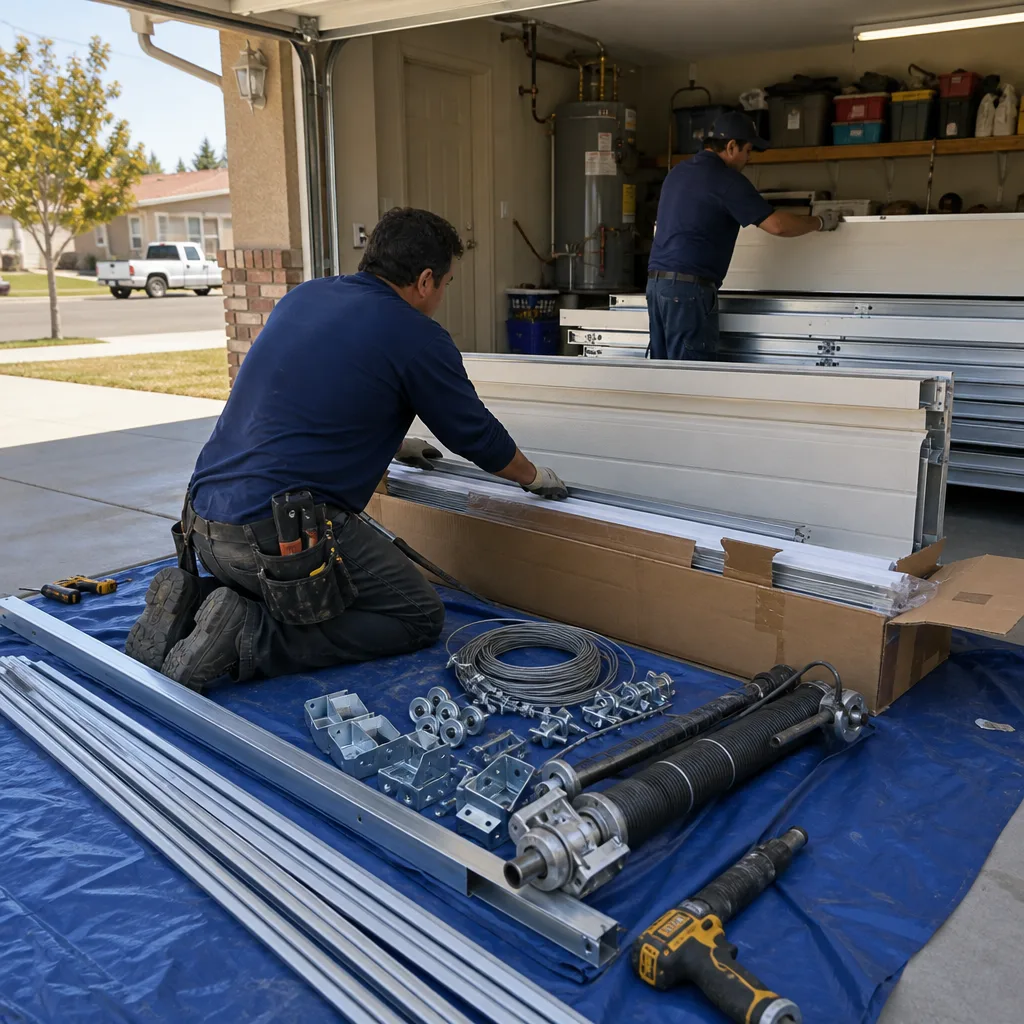
- Using screwdrivers or rebar as winding bars. The most common cause of torsion spring injuries in Fontana and everywhere else is improvisation at the winding cone. The bar needs to fit the cone’s socket exactly. Anything else will slip or shear.
- Buying a “universal” spring. There is no such thing. A spring is matched to door weight, height, cable drum size, and track radius. A universal spring is a spring that is wrong for every door.
- Disconnecting the opener with the door in the open position. If you pull the red emergency release cord while the door is up and the spring is broken, the door drops. Gravity does not wait for you to move your ladder. Always work with the door down and the opener unplugged.
- Ignoring a frayed cable. A cable with three broken strands is not “fine for now.” It is a ticking failure. The question is not whether it breaks; it’s where the door is when it does, and what’s underneath it. In Fontana, that’s often a car, a bicycle, or a kid.
- Setting opener force too high because the door “sticks.” If your opener has to work harder to close the door, the problem is the door’s balance or the rollers, not the force setting. Cranking the force up masks the problem and disables the safety reversal. This is how garage doors injure people.
- Painting over rust instead of addressing it. Rust on a torsion spring is a fatigue signal. Painting it hides the warning sign. If the spring shows visible rust, have it inspected, especially before a Fontana summer.
- Skipping the photo record on DIY work. Even a small repair documented with a before-and-after photo on your phone preserves resale and insurance value. The habit is free.
When to Call a Professional
The decision tree is short. If the spring is involved in any way, call. If a cable is frayed or snapped, call. If the door comes off the track, call. If the opener’s reversal test fails, call. If the door is heavy and hard to open by hand, which tells you the spring has failed or is undersized, call.
Everything else, from weatherseal to lubrication to sensor alignment, is reasonable homeowner territory. Our free second opinion offer applies to any written estimate from another company, and our estimates in Fontana are free. Call Servo Garage Doors Fontana at (951) 307-0747, and a person answers, day or night. We’ll send a named technician with an on-the-way text, not a callback window.
Frequently Asked Questions
A torsion spring replacement in Fontana typically runs $280-$420 for a standard double-car door, installed, with the spring matched to your door’s measured weight. The price includes the spring, cable re-tensioning, drum reset, and opener force verification. We quote a flat, written price before any work starts, per Clause 1 of The Haven Standard. Call (951) 307-0747 for an exact number on your specific door.
No. A torsion spring under load stores roughly 200 foot-pounds of rotational force, and a slip during winding can turn a winding bar into a projectile. Extension springs carry similar risk through linear tension. This is the one repair where professional help is not optional, regardless of skill level or confidence.
A broken torsion spring is typically marked by a visible gap in the coil, usually with the spring split into two pieces. You may also hear a loud bang from the garage when it happens, and the door will be extremely heavy or impossible to open by hand, even with the opener disconnected. If the door opens only a few inches and stops, that is the same failure.
Lubricate the rollers, hinges, and springs twice a year with a silicone-based garage door lubricant. Replace the bottom weatherseal when it cracks or flattens. Test the safety reversal monthly using a 2×4 block. Tighten loose hinge bolts with a socket set. All of these are safe for a careful homeowner.
Estimates are free. When we arrive, the technician assesses the door, explains what was found, and delivers a flat, written price with a written scope before any work begins. If you decline the repairs, you owe nothing. If you accept, the price on the page is the price you pay.
It depends on your policy and the cause of the damage. A door damaged by a vehicle or a fallen tree limb is typically covered. Wear-and-tear failures like a broken spring are generally considered maintenance and are not covered. If you performed a DIY spring repair that later failed, the insurance company may exclude the resulting damage under the policy’s unperformed work provisions. Documented professional repairs strengthen any claim.
The Bottom Line
Garage door DIY in Fontana is a calculation, not a blanket answer. The weatherseal, the lubrication, the sensor alignment: these are routine, learnable, safe. The torsion spring, the cables, the opener force settings: these are not. What separates them is not your capability but stored energy, and the consequences of getting it wrong are not repairable with a trip to the hardware store. When you do hire for the unsafe work, hire for the documentation as much as the repair itself. The photo record, the written price, the licensed technician: these are the things that hold value long after the door closes. And if you’re weighing the decision, our advice is simple. Do what’s safe. Call for what’s not. Servo Garage Doors Fontana is here either way. Call (951) 307-0747 and we’ll walk through it together.
Written by Marcus Deller, Owner at Servo Garage Doors Fontana, serving Fontana since 2015. Browse more guides & resources.