
Last updated September 20, 2026
Full 25-point door and opener safety check with every visit - springs, cables, rollers, tracks, and your LiftMaster or Chamberlain opener included
You get a price before we start. It does not change when the truck arrives.
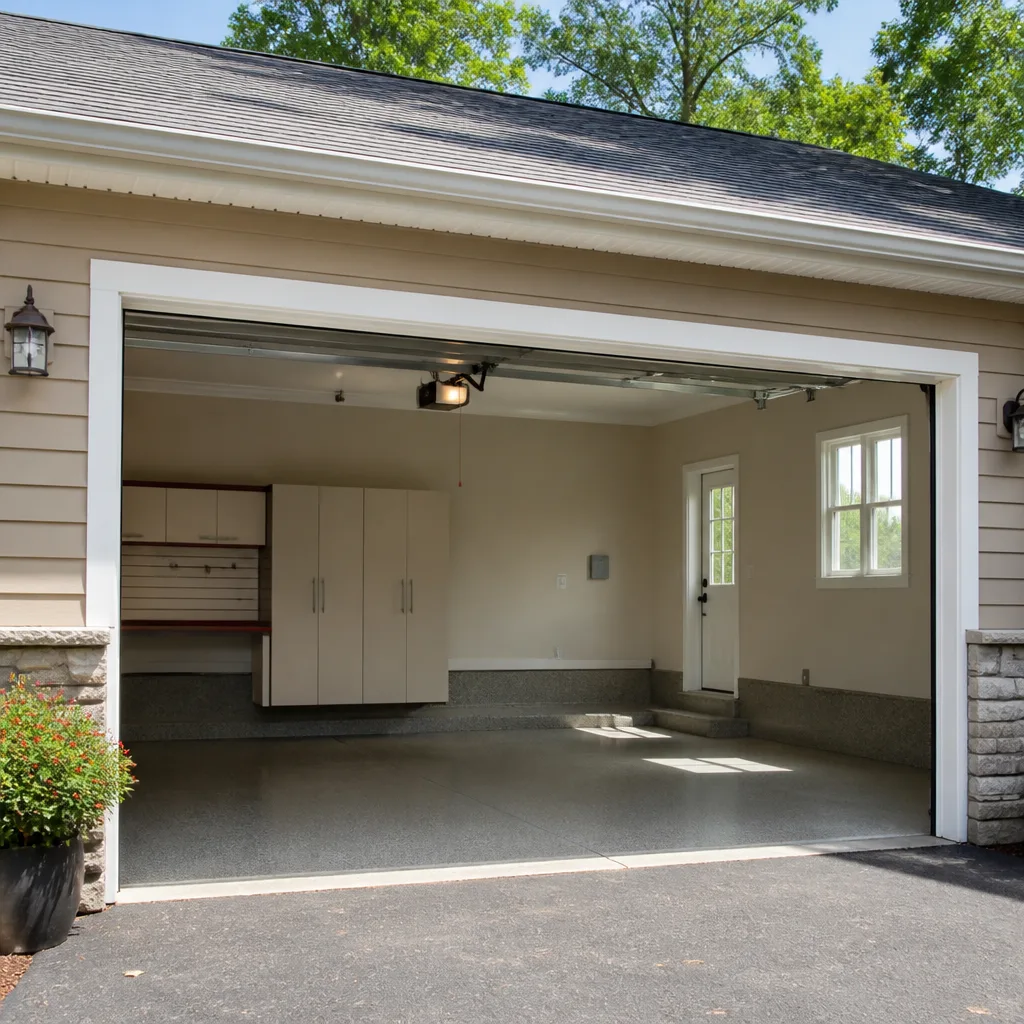
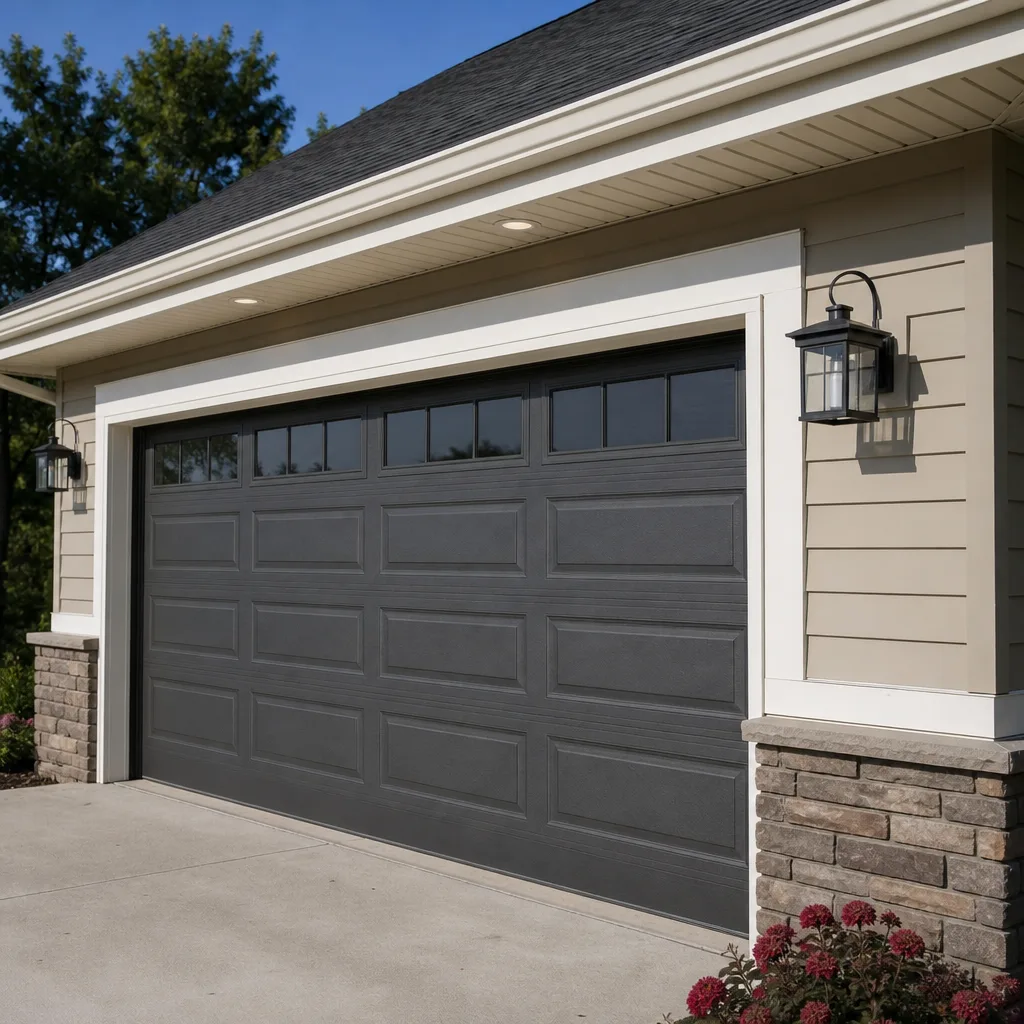
 Before
 After
After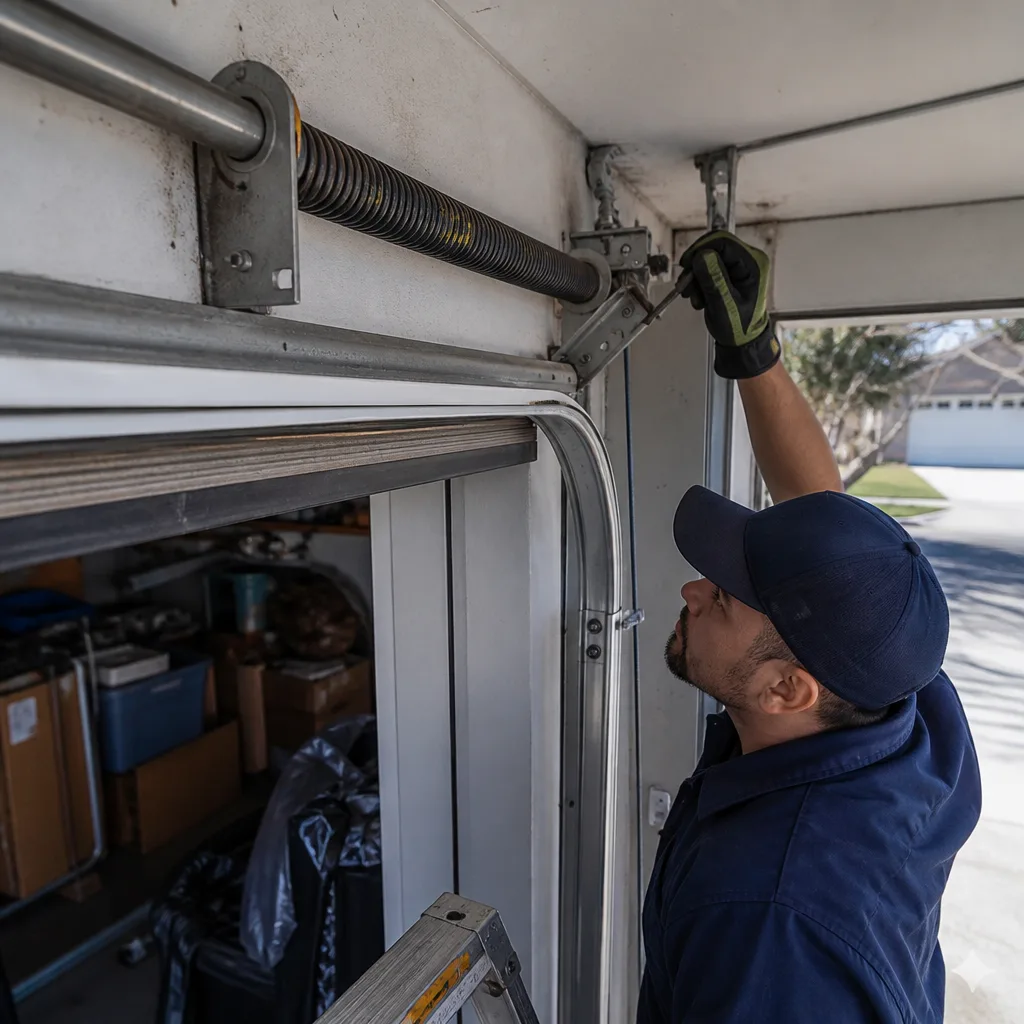 Before
 After
After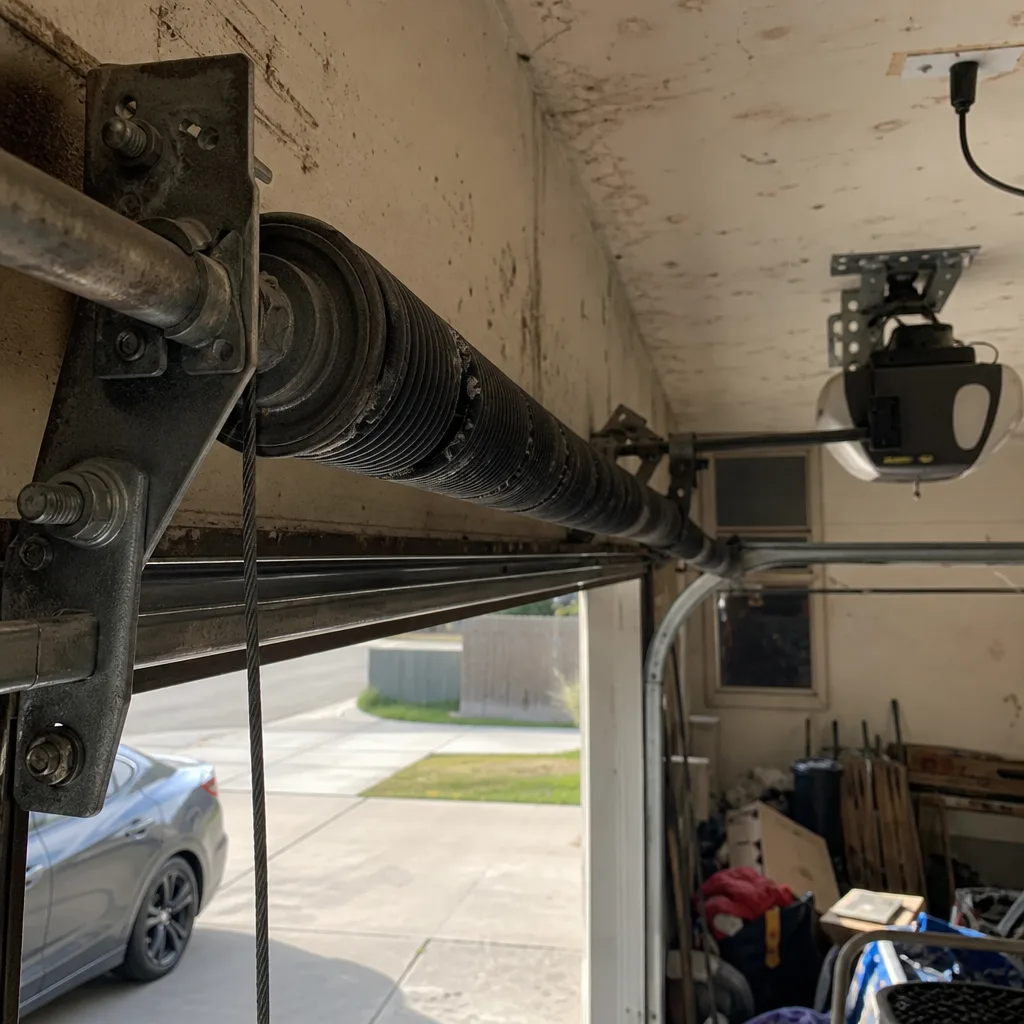 Before
 After
AfterThe Complete Guide to Garage Door in Fontana
Most homeowners can name the panel but not the torsion spring, the cable drum, or the bottom seal. That gap is exactly what makes garage door quotes hard to evaluate. A door is not one purchase decision. It is a system of seven interdependent components, and replacing one without diagnosing the others is how people end up calling twice. This guide maps every component, its failure mode, and its documented cost range in Fontana, so you can read any estimate against something concrete, or explore Garage Door Cost Breakdown: The Fontana Homeowner’s Reference for 2026 for deeper pricing context. We are writing this from the floor of a Fontana garage door business. We have seen what inland heat does to steel, what cheap rollers do to tracks, and what happens when a panel gets replaced on a door whose spring was already failing.
Quick Answer
A garage door in Fontana is a seven-component system: torsion spring, cables, drums, rollers, tracks, opener, and weatherseal. Most repairs in this market cost between $120 and $340 for a single component, while a full door replacement typically runs $1,700 to $4,200 installed. The most common failure we see in Fontana is a torsion spring break, which averages $180 to $340 and should be handled by a professional on the same day.
Table of Contents
- The Torsion Spring: The Heart of the Door
- Cables and Drums: What Holds the Load
- Rollers and Tracks: Where Fontana Heat Shows Up First
- The Opener: More Than a Motor
- The Weatherseal: The $30 Part That Protects Everything Else
- Panel Replacement vs. Full Door Replacement: The Load-Bearing Math
- Cycle Ratings and Realistic Lifespan in Fontana
- What a Legitimate Quote Document Contains
- Common Mistakes to Avoid
- When to Call a Professional
- Frequently Asked Questions
- The Bottom Line
BeforeAfterThe Torsion Spring: The Heart of the Door
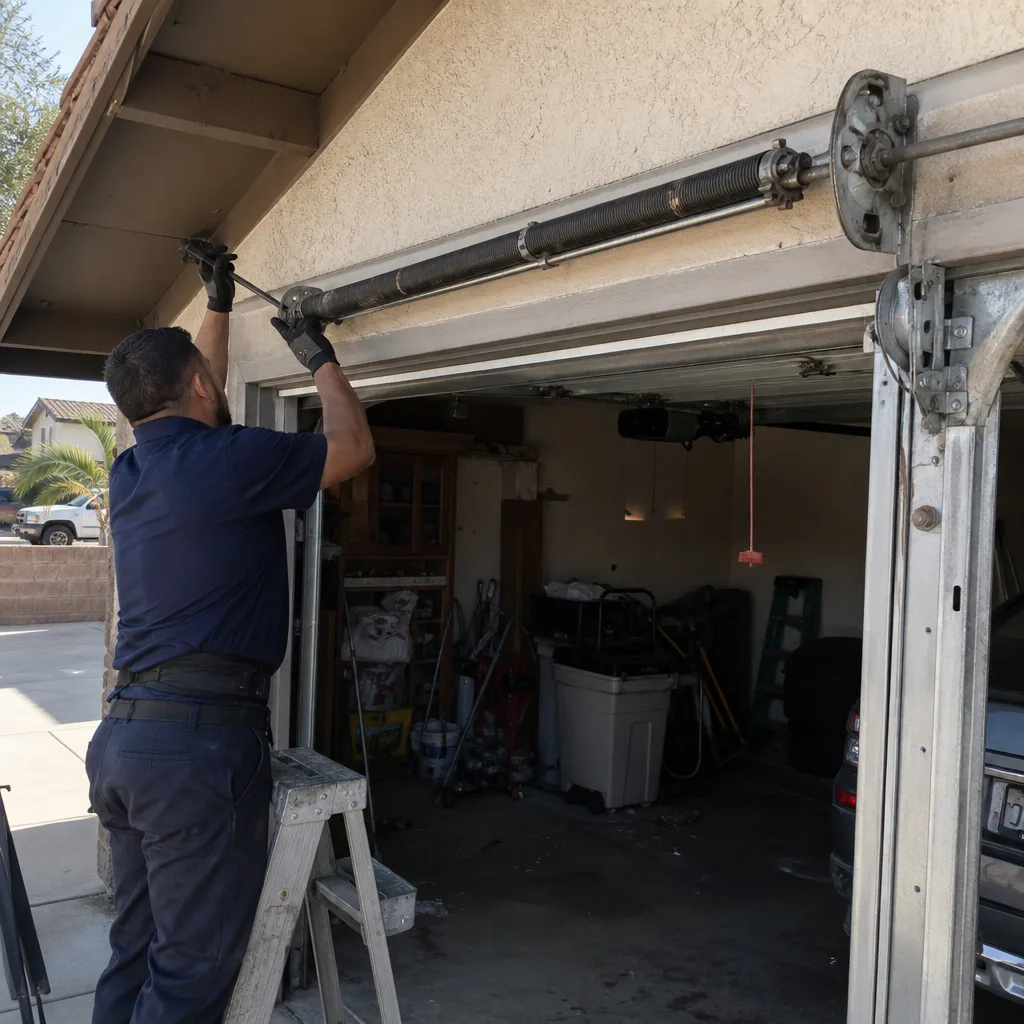
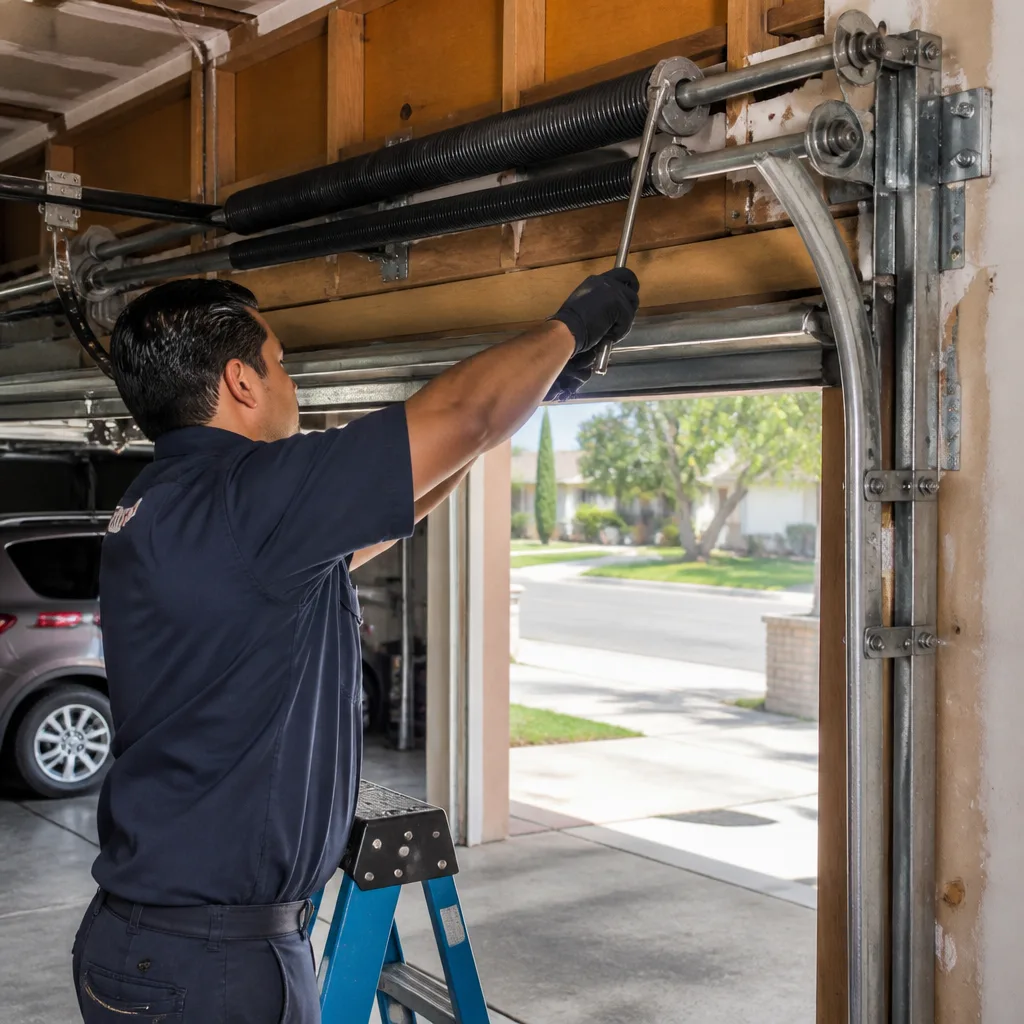
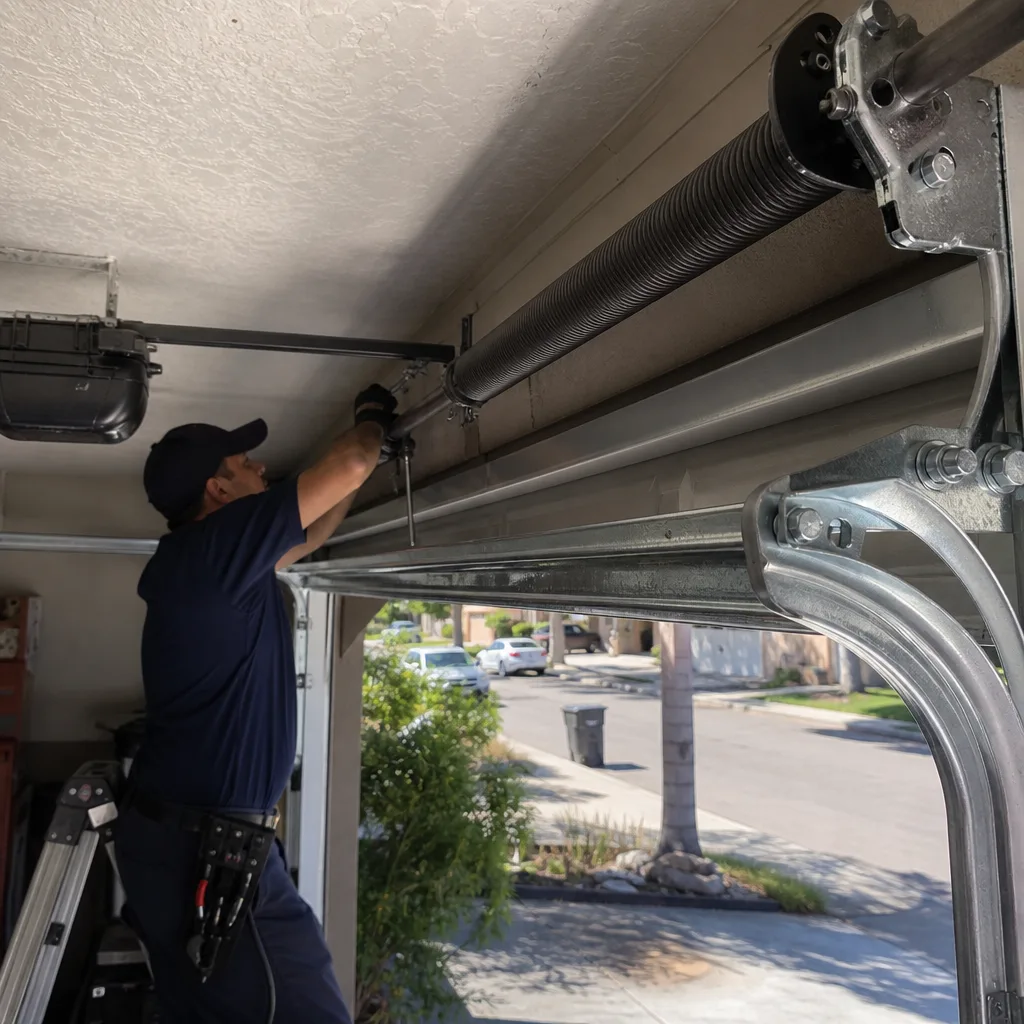
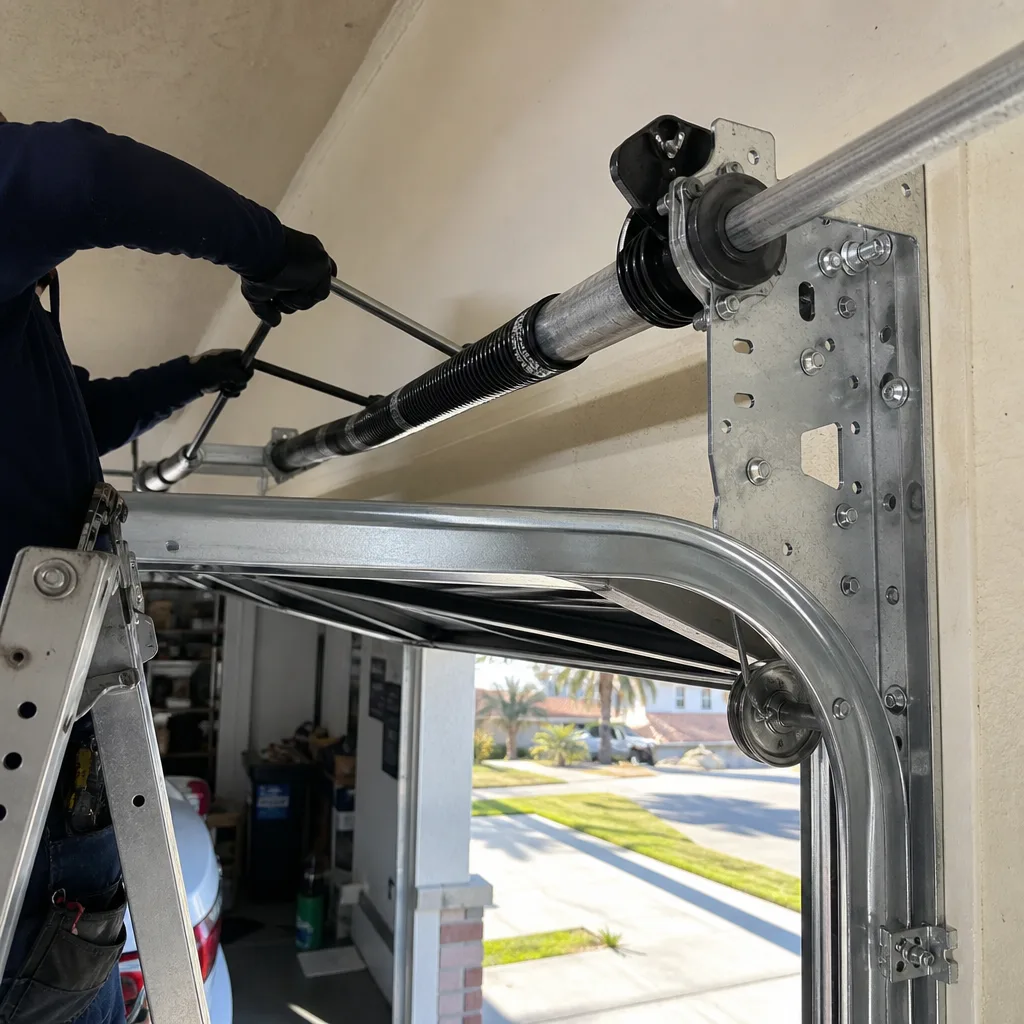
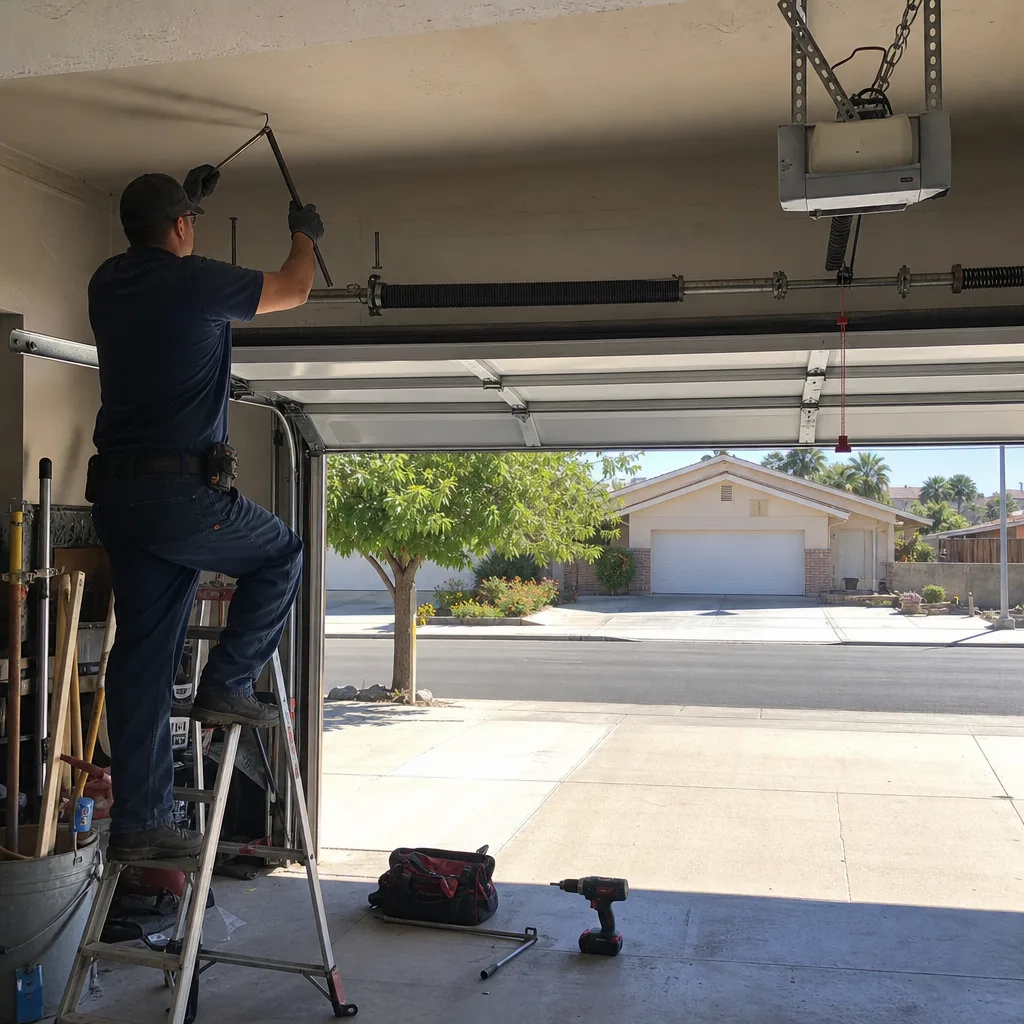
The torsion spring is the coiled steel component mounted above the door opening. It stores the mechanical energy that lifts the door, counteracting the weight of a panel assembly that can weigh 150 to 400 pounds. When you press the opener button, the motor does not lift the door by itself. The spring does the heavy lifting. The opener simply triggers the movement.
In Fontana, we replace torsion springs more than any other component. The inland heat does not cause springs to fail directly, but it does accelerate the metal fatigue process. A spring is rated for a specific number of cycles. One cycle is one full open and one full close. A standard spring from a big-box retailer is often rated for 10,000 cycles. A higher-grade spring is rated for 20,000 to 30,000 cycles. In a household where the garage door opens four times a day, a 10,000-cycle spring lasts about seven years. In a household with two cars, a home business, or teenagers, the door can cycle eight to twelve times a day, and that same spring lasts under three years.
The failure is almost always a clean snap. You will hear it as a loud bang from the garage, like a firecracker or a dropped weight. The door will not lift, or it lifts six inches and stops. The spring has broken at a coil. Here is what matters: the repair cost is predictable. In Fontana, a torsion spring replacement typically runs $180 to $340 for a single spring, including the part and labor. If you have a two-spring system and one breaks, we recommend replacing both. The second spring has the same cycle count as the first. It will break within months, and you will pay for a second service call.
Spring wire gauge matters. A 0.225-inch wire spring is common on a standard 16×7 door. A 0.250-inch wire spring is a heavier-gauge upgrade that lasts longer. Ask any technician what gauge they are installing. If they cannot answer, that is a signal. A legitimate quote includes the wire diameter, the cycle rating, and the labor. Garage door repair in Fontana should always start with a written breakdown of these numbers.
One safety note: torsion springs are under hundreds of pounds of tension even when the door is closed. Do not attempt to remove or adjust one without the correct winding bars and training. This is not a DIY-friendly component. A spring that unwinds incorrectly can break a hand or worse. A professional installs and winds torsion springs with rated tools and a documented process.
Cables and Drums: What Holds the Load
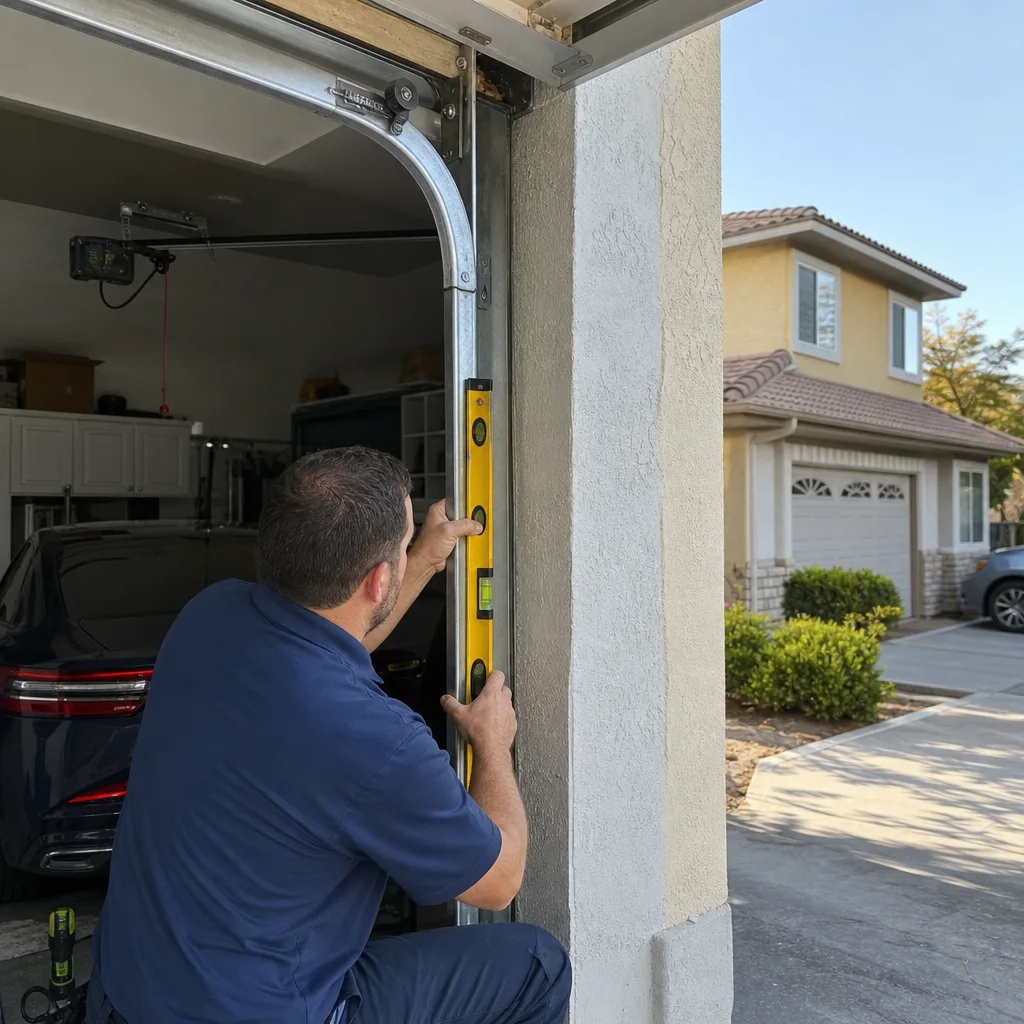
The cables are the braided steel wires that run from the bottom brackets on each side of the door up to the cable drums mounted above. The drums are the grooved spools that wind and unwind the cables as the door moves. Together, cables and drums transfer the spring’s stored energy into smooth, balanced lifting force.
Cable failure looks different from spring failure. A cable usually frays before it snaps. You will see individual wire strands starting to separate near the bottom bracket or at the drum. If the cable snaps completely, the door drops unevenly. One side hangs high, the other side low. The door jams in the track, and the opener’s safety sensors will not allow it to move.
In Fontana, we see cable wear accelerate in garages where the door is used heavily, especially in summer. The steel in the cable expands and contracts with temperature swings. Over time, the constant winding on the drum creates friction points. A cable replacement in this market typically costs $90 to $180 per side, and we always recommend replacing both cables at the same time. The reasoning is the same as with springs: if one cable has worn to the point of failure, the other is at the same point.
Here is the diagnostic sequence our technicians follow when a door is hanging unevenly:
- Inspect the cable on the low side for fraying or separation.
- Check the cable drum for wear grooves or a slipped cable wrap.
- Verify the bottom bracket is not bent or corroded.
- Confirm the torsion spring is intact and holding tension.
- If the cable has slipped off the drum, reset and re-tension the cable, then cycle the door manually to confirm balance.
Cables and springs work together. Replacing a cable without checking the spring is a half-repair. In our experience, a snapped cable is often the downstream result of a spring that has lost tension and allowed the door to drop unevenly for weeks. The cable takes the impact. A real diagnosis identifies the root cause, not just the visible failure.
Rollers and Tracks: Where Fontana Heat Shows Up First
Rollers are the small wheels attached to the door panels that ride inside the vertical and horizontal tracks. Tracks are the steel channels mounted to the walls and ceiling that guide the door’s movement. Together, they keep the door aligned and moving smoothly.
Fontana summers routinely hit 100 degrees, and that heat becomes a factor in two ways. First, steel track brackets expand and contract through the daily cycle. Over years, the expansion-contraction gradually loosens the bolts that hold the track to the wall. A track shifts by a quarter inch, and suddenly the door starts scraping or binding. It looks like a track problem. It is usually a bracket problem. The fix is to re-secure the track, check the alignment, and sometimes replace the bracket hardware. A track alignment service call in this market runs $85 to $150.
Second, the heat ages nylon rollers faster than mild climates do. Nylon rollers with sealed bearings last 10,000 to 15,000 cycles. In a hot garage, the nylon can develop hairline cracks around the bearing housing. When a roller fails, the door vibrates, makes a grinding noise, and can eventually jump the track. Roller replacement typically costs $10 to $25 per roller for parts, with labor around $75 to $125 for a full set. We recommend nylon rollers with sealed ball bearings over steel rollers. Steel rollers are louder, wear the track faster, and do not last as long in a hot environment.
Here is what to look for during a visual inspection:
- Wobble in the roller wheel when the door moves.
- Visible flattening or chips on the roller surface.
- Loose track bolts or gaps between the track and the wall bracket.
- Scrape marks on the inner edge of the track where the roller binds.
- A door that slows or stutters at the same point every cycle.
Track replacement is less common than track realignment. A bent track from a vehicle impact is a replacement item, typically $200 to $450 for the track section and labor. A misaligned track from heat cycling is a service call, not a replacement. The difference matters, and it is one of the places where a photo record makes the diagnosis clear. We photograph the track alignment and the bracket hardware, then show the customer where the wear pattern is. You should never be asked to approve a track replacement without seeing the bend or the wear yourself.
The Opener: More Than a Motor
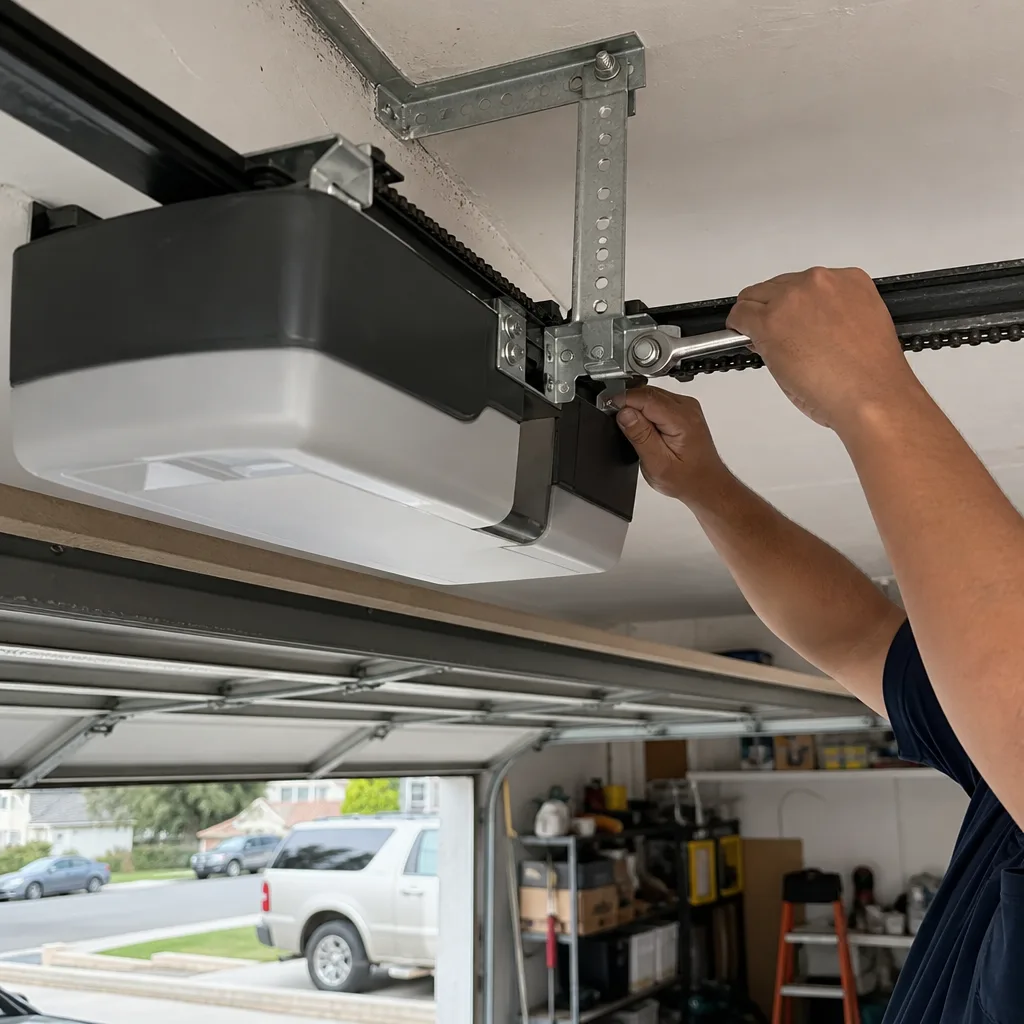
The garage door opener is the motorized unit mounted to the ceiling that pulls or pushes a trolley carriage along a rail. The carriage connects to the door and moves it up and down. The opener also contains the logic board, the limit switches, the safety sensors, and the remote receiver. When an opener fails, the cause is rarely the motor itself. It is one of the supporting components.
The logic board is the circuit board inside the opener housing. It processes signals from the remote, the wall button, and the safety sensors. A logic board failure shows up as an opener that will not respond, a wall button that flashes, or a door that reverses immediately after starting. Logic board replacement on a mid-range opener is typically $120 to $220. On some older models, the logic board is no longer manufactured, and the opener must be replaced.
The limit switches tell the opener where the up and down positions are. When a limit switch drifts out of adjustment or fails, the door stops short of the floor, or it reverses after touching the floor. This is a $90 to $130 diagnosis and adjustment call in most cases. The fix takes ten minutes for a technician who knows the wiring. It is not a component you replace; it is a setting you correct.
The safety sensors are the pair of photo eyes mounted four to six inches off the floor on either side of the door opening. They project an invisible beam across the door path. If the beam is broken, the opener will not close the door. In Fontana garages, the most common sensor issue is alignment, not component failure. Heat expansion can shift a sensor bracket by a few millimeters, and the beam misses the receiving eye. The fix is a bracket adjustment. If the sensor itself is dead, replacement is $60 to $110 for the pair.
A full garage door opener replacement in Fontana runs $400 to $750 installed, depending on the drive type and horsepower. Belt-drive openers are quieter and hold up well in our heat. Chain-drive openers are cheaper but louder. Screw-drive openers are not a good fit for hot metal-on-metal expansion cycles. For most Fontana homes, a belt-drive opener with a DC motor is the right balance of cost, noise, and longevity.
One detail that matters more than people expect: the opener’s force settings. When a door is newly serviced, the force limiter should be tested so the opener reverses against light resistance. A door that closes with too much force is a safety hazard and a liability. A documented photo record of the force test result is part of a complete service visit.
The Weatherseal: The $30 Part That Protects Everything Else
The bottom weatherseal is the rubber or vinyl strip that runs along the bottom edge of the door panel. It seals the gap between the door and the garage floor. It is the least expensive component in the system and the one most often ignored. In Fontana, that is a mistake.
Our summer heat and occasional heavy rain make the seal work harder than it would in a coastal climate. A cracked or flattened seal lets hot air, dust, and monsoon-season moisture into the garage. That moisture accelerates rust on the track brackets and the bottom panel. The hot air raises the ambient temperature inside the garage, which ages the nylon rollers and the opener’s electronics faster. The weatherseal is not just about keeping water out. It is a temperature and dust barrier.
Replacement cost is low: $30 to $70 for the seal material, and $80 to $130 installed by a technician. The seal should be checked at least once a year. Run your hand along the bottom edge when the door is closed. If you can feel a gap, or if the rubber has hardened and lost its flex, it is time to replace it.
There are two common seal types: T-style and bead-style. The T-style seal slides into a T-shaped channel in the bottom of an aluminum retainer. The bead-style seal presses into a round channel. The type matters because they are not interchangeable. A technician can identify the type in seconds. When you call for a seal replacement, expect the technician to bring both types so the job is not delayed. This is one of the components where a truck-stocked vehicle makes a same-day fix routine.
Here is the maintenance sequence we suggest for the weatherseal:
- Close the door completely.
- Visually inspect the bottom edge for gaps, cracks, or flattening.
- Run a hand along the seal to feel for hardening or brittleness.
- Check the aluminum retainer for corrosion or loose screws.
- If the seal is failed, replace it before the hot season or the rainy season.
A weatherseal replacement is not a repair that requires urgency. It is scheduled work. But it is also the single cheapest preventive measure you can take to extend the life of the other six components. The Servo Garage Doors Fontana home page covers the full suite of services, but this guide is meant to show how the components connect.
Panel Replacement vs. Full Door Replacement: The Load-Bearing Math
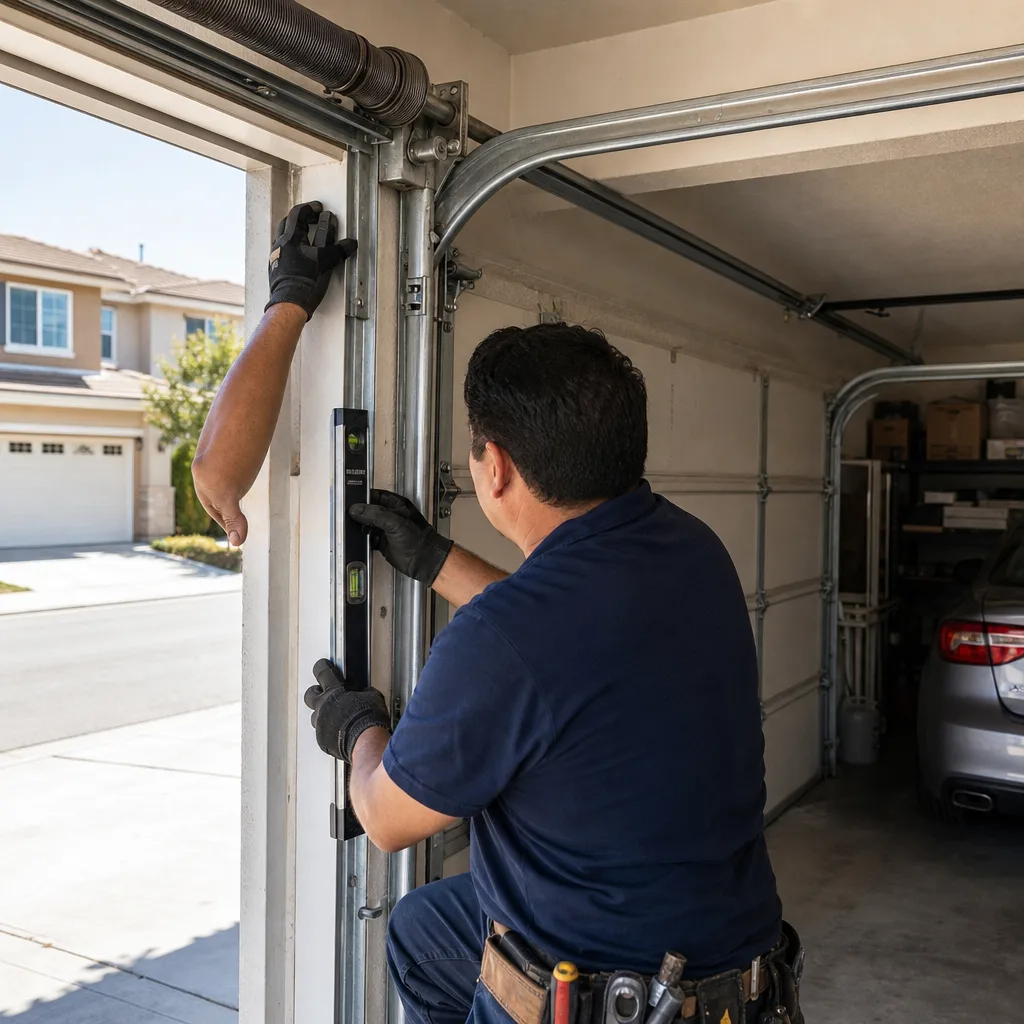
When a door panel is dented, cracked, or rusted through, the homeowner faces a question: replace the panel, or replace the whole door. The answer depends on the load-bearing math of the spring assembly and the condition of the other panels.
A garage door is a counterbalanced system. The torsion spring is sized to the exact weight of the door as it was manufactured. Each panel has a specific weight based on its steel gauge, insulation layer, and dimensions. If you replace a single panel with a panel of a different weight, you change the balance of the door. The spring is now either over-wound or under-wound for the new weight. An over-wound spring lifts too easily and slams open. An under-wound spring labors and shortens its lifespan.
Panel replacement works when the door is recent enough that the manufacturer still produces the exact same panel. On a door that is under five years old, a single panel replacement is practical. The panel can be ordered from the manufacturer, the weight matches, and the spring remains correctly sized. Panel replacement cost in Fontana typically runs $250 to $500 depending on the panel width and insulation.
On a door that is ten years old or more, panel replacement becomes harder to justify. The manufacturer may have changed the panel design. The paint color has faded, so a new panel will not match. The other panels have accumulated the same cycle wear. And critically, the spring has aged to the point where it will need replacement soon anyway. At that point, the financially honest recommendation is a full door replacement.
We work with Clopay, Amarr, and Wayne Dalton doors regularly in Fontana. A standard 16×7 non-insulated steel door from one of these manufacturers installed runs $1,700 to $2,800. An insulated steel door with an R-value of 9 to 12 runs $2,400 to $3,600. A premium insulated door with a higher R-value and a wood-look finish runs $3,200 to $4,200. Garage door installation in Fontana should include a written scope that lists the door model, the insulation value, the spring rating, and the labor. If the estimate does not name the panel model and the steel gauge, it is not a quote. It is a guess.
Here is the decision sequence we walk customers through:
- Identify the damaged panel and measure its dimensions.
- Determine the door’s age and the manufacturer’s current panel availability.
- Compare the replacement panel weight to the original panel weight.
- Assess the spring’s remaining cycle life.
- If the spring is over five years old, factor a spring replacement into the total cost either way.
- If total panel replacement plus spring replacement approaches 60% of a new door, replace the door.
The point is not to upsell a new door. The point is to avoid a situation where you pay $500 for a panel and then $300 for a spring six months later, and the door still looks old and mismatched. A documented, written comparison makes the decision clear. That is what we mean when we say the paperwork does the persuading.
Cycle Ratings and Realistic Lifespan in Fontana
Every door component that moves has a cycle rating. A cycle is one complete open and one complete close. The rating tells you how many cycles the part was designed to survive before fatigue failure. Understanding this number tells you when you will be calling for service again.
A standard torsion spring from a home center is often rated at 10,000 cycles. A spring we install is rated at 20,000 to 30,000 cycles, depending on the wire gauge and the door weight. The difference is not marketing. It is metallurgy and coil geometry. A longer spring with more coils spreads the stress across more steel, and each cycle fatigues the material less. The result is roughly double to triple the lifespan.
Here is the math for a typical Fontana household:
- A one-car household opens and closes the garage door about four times a day. That is roughly 1,460 cycles per year. A 10,000-cycle spring lasts about seven years. A 25,000-cycle spring lasts seventeen years.
- A two-car household with two working adults opens and closes the door six to eight times a day. That is 2,200 to 2,900 cycles per year. A 10,000-cycle spring lasts three to four years. A 25,000-cycle spring lasts eight to eleven years.
- A household with a home business, a workshop, or teenagers can hit twelve cycles a day. That is 4,380 cycles per year. A 10,000-cycle spring lasts just over two years.
Fontana’s heat does not change the cycle math directly, but it affects the environment the components live in. A garage that reaches 120 degrees in August ages nylon and rubber faster than a 90-degree garage. The rollers’ bearing grease degrades. The weatherseal hardens. The opener’s capacitor can fail prematurely. The heat is not a separate cause of failure. It is an accelerant on top of the cycle count.
When a technician quotes you a spring, ask for the cycle rating. When a technician quotes you a door, ask for the spring that comes with it. A good door with a 10,000-cycle spring is a good door with a bad heart. A mid-range door with a 25,000-cycle spring is a better ten-year decision. This is the kind of detail that separates a quote you can evaluate from a number someone wrote on a business card.
What a Legitimate Quote Document Contains
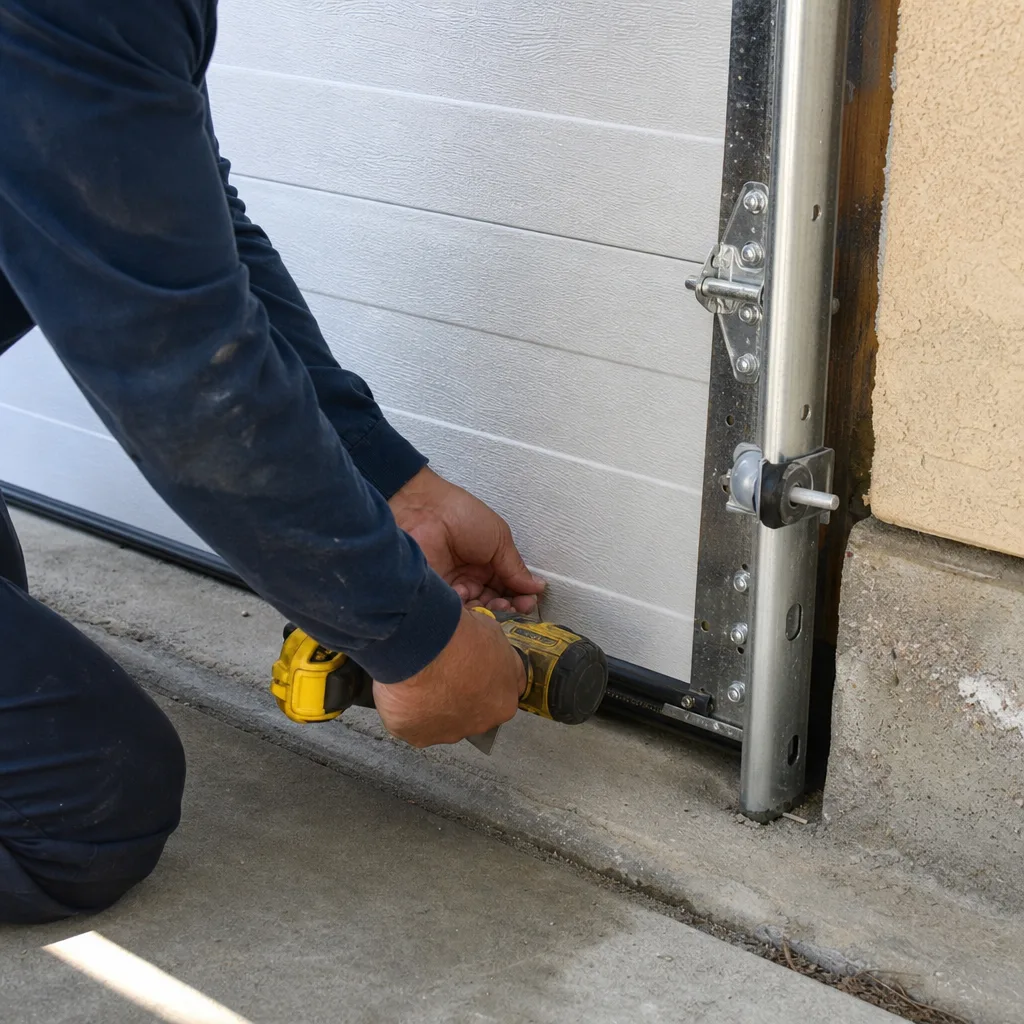
A phone estimate is a number. A written quote is a document. The difference determines whether you can hold anyone accountable after the work is done. Here is what should be on any garage door quote you receive in Fontana, and what each item tells you. For Garage Door Permits, Codes & Inspections in CA: What You Need to Know, see our separate guide.
A legitimate quote document contains the following:
- The exact component name and part number or specification. “Torsion spring, 0.250-inch wire, 25,000-cycle” is a quote. “Spring replacement” is a description of a hope.
- The labor cost separated from the parts cost. If the labor is buried in a single lump sum, you cannot evaluate whether the parts are being marked up unreasonably.
- The warranty terms for parts and labor, in writing, with a duration stated in months or years.
- The total price, flat and fixed, with a note that no additional charges will be added without written approval.
- The scope of work, including what will be done and what will not be done.
- The technician’s name and license number, if you are hiring a licensed contractor.
Clause 1 of The Haven Standard, the standard Servo Garage Doors Fontana operates under, requires a flat, written price and written scope before any work starts. That is not a protection for us. It is a protection for the customer. You should never approve a repair on a verbal promise of “we’ll see what it needs and go from there.” That sentence has cost more Fontana homeowners more money than any broken spring.
Clause 4 of the standard is the reason the technician photographs the failed part before quoting a replacement. If someone tells you the spring is broken, you should be able to see the break. If someone tells you the track is bent, you should be able to see the bend. A photo record takes the disagreement out of the diagnosis. The photo is delivered to you with the receipt. If a company refuses to show you the failed component, walk away.
When you bring us a competing written estimate, we provide a free second opinion on it. Bring the paperwork. We will go through it line by line and tell you where the price is fair, where it is padded, and what we would do differently. No coupon, no code, no obligation. The estimate itself is the conversation starter.
Common Mistakes to Avoid
- Replacing one spring when both are the same age. If one torsion spring has broken, the second spring has the same cycle count and will break within months. Replacing both saves a second service call fee.
- Ignoring a frayed cable. A cable that is visibly fraying near the drum will snap. Once it snaps, the door drops unevenly and can bind in the track. The repair cost goes up.
- Calling a track problem when it is a bracket problem. In Fontana, heat expansion loosens track bolts over time. A door that scrapes is often a loose bracket, not a bent track. Replacing a track that only needed tightening is wasted money.
- Buying the cheapest spring available. A 10,000-cycle spring is not a bargain. It is a repeat purchase waiting to happen. Pay the marginal difference for a 25,000-cycle spring.
- Skipping the weatherseal because it is “just rubber.” A failed seal lets heat and moisture into the garage, which ages every other component. It is the cheapest preventive maintenance on the door.
- Accepting a phone quote without seeing the failed part. If the technician cannot show you the break, the bend, or the wear, you are approving work on faith. The documentation should exist before the invoice does.
- Replacing a panel on a door whose spring is near the end of its life. You will pay for the panel, and then you will pay for the spring, and then you will still have a mismatched door. Do the math before you commit.
When to Call a Professional
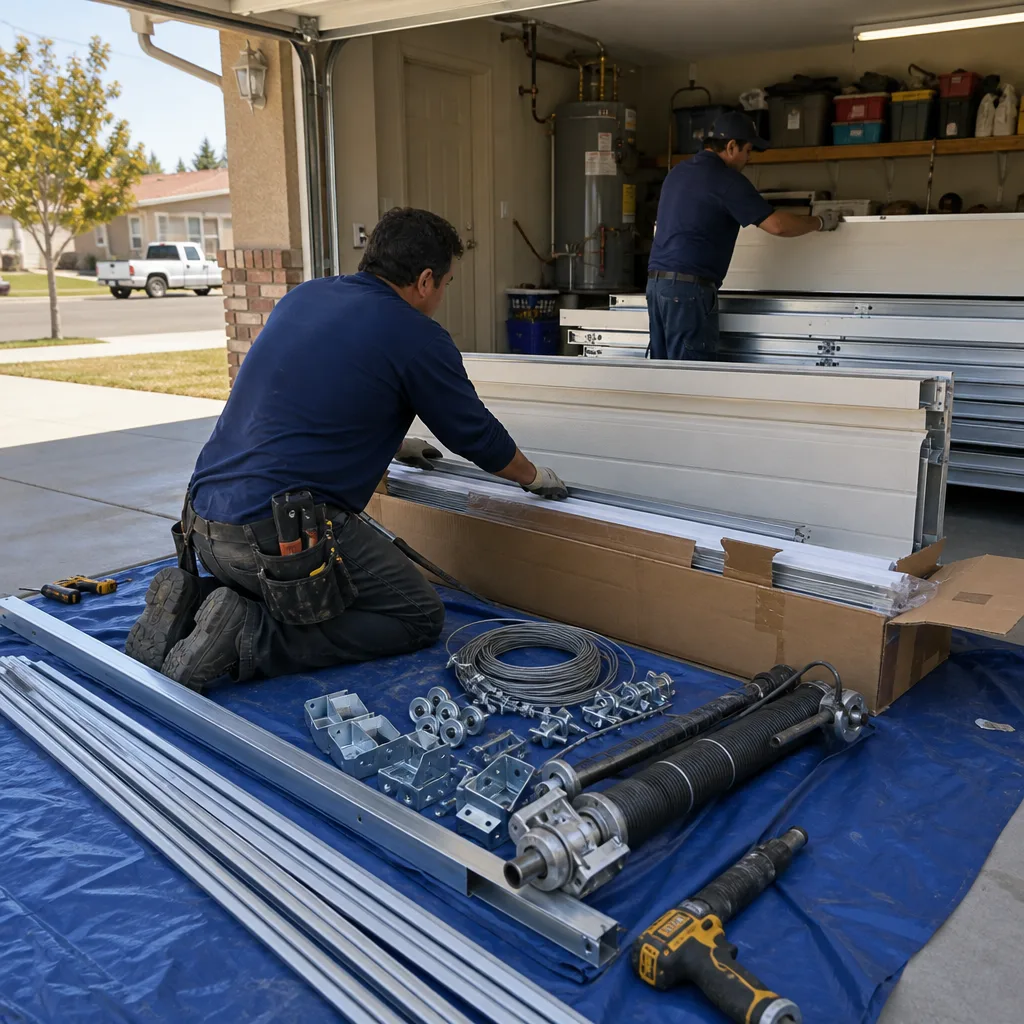
A torsion spring under tension is the most dangerous component in the system. If the spring is broken, call a professional. If a cable has snapped, the door is unbalanced and the remaining cable is carrying the full load. Call a professional. If the door has come off the track, the panel assembly is heavy and unstable. Call a professional. If the opener is reversing unexpectedly or failing to reverse when it should, the force settings and safety sensors need a trained adjustment. Call a professional.
You can inspect the weatherseal, check the rollers visually, and note where the door is scraping. Those observations are valuable. But the repair belongs to someone whose tools and training match the forces involved. Servo Garage Doors Fontana offers free estimates in Fontana and publishes more guides & resources on our blog. Call (951) 307-0747. A background-checked, uniformed technician will arrive with the parts on the truck, quote a flat written price before any work starts, and leave you with a documented photo record of what was found and what was done.
Frequently Asked Questions
A torsion spring replacement in Fontana typically costs $180 to $340 for a single spring, including labor. We recommend replacing both springs when one breaks, which brings the total to roughly $280 to $480. The exact price depends on the spring wire gauge and the door weight. Call (951) 307-0747 for a written quote before anything is touched.
Yes. Spring, cable, and roller repairs are same-day jobs for us because our technicians carry the common parts and sizes on the truck. A broken spring is a same-day repair. Full door replacements are scheduled work with a written measure and a written price before any order is placed.
No. Clause 1 of The Haven Standard requires a flat, written price and written scope before work starts. If the technician finds something additional, you approve the additional work in writing before it is done. The price you approve is the price you pay.
For common repairs, yes. Torsion springs in standard wire gauges, cables, rollers, brackets, and weatherseal types are on the truck. For panel replacements and full doors, the parts are ordered after the written measure and quote. That is why panel work is scheduled, not same-day.
A steel garage door panel assembly can last twenty to twenty-five years in Fontana with proper maintenance. The moving components do not last that long. Springs last seven to seventeen years depending on cycle rating and usage. Rollers last five to ten years. Weatherseals last two to five years. The door outlives the parts, which is why regular inspection matters.
Repair is the right call when the door is under ten years old and the failing component is isolated. Replacement is the right call when the door is older, the panels are rusted or mismatched, the spring is near the end of its life, and the total repair bill approaches 60% of a new door. We walk you through the math in writing before you decide. Call (951) 307-0747 for a free estimate.
The Bottom Line
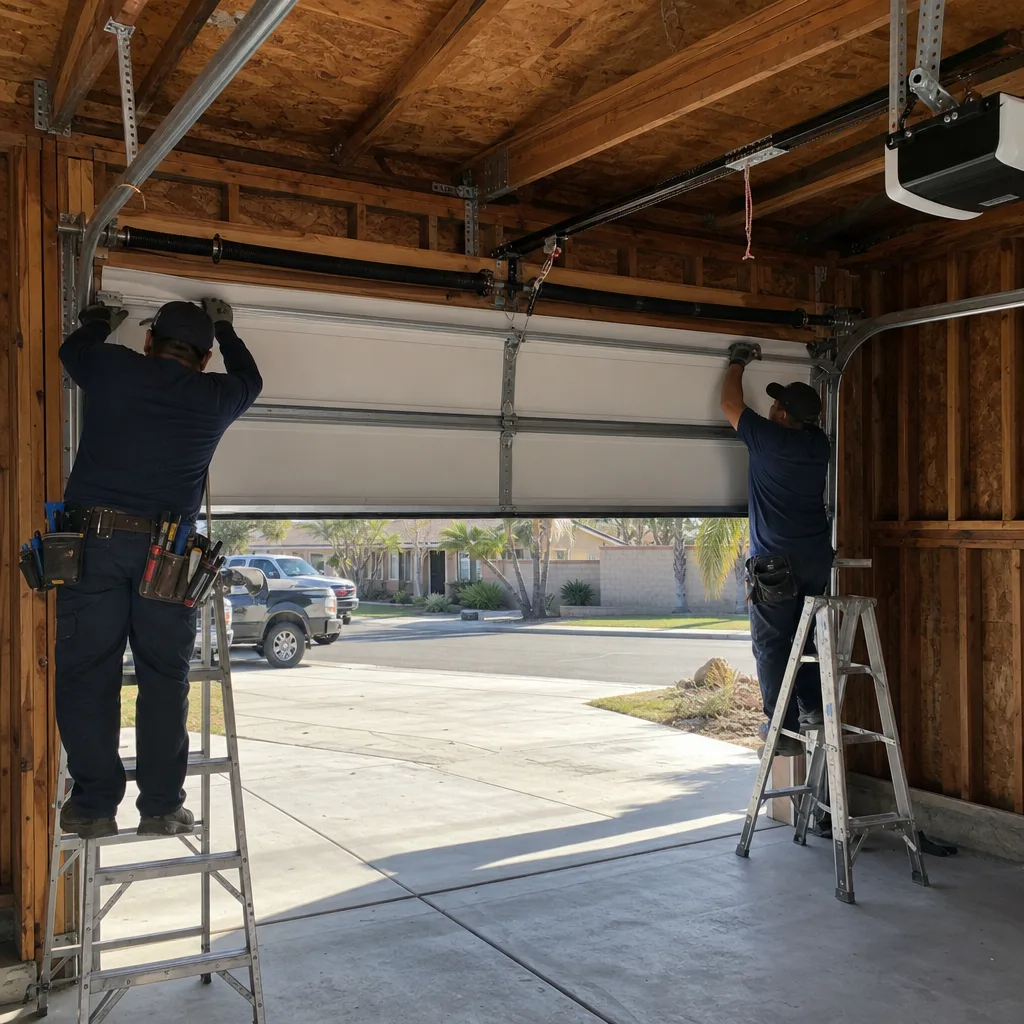
A garage door in Fontana is a system, not a single product. The torsion spring, cables, drums, rollers, tracks, opener, and weatherseal all interact, and a failure in one accelerates wear in the others. The heat of our inland summers is not a cause of failure, but it is an accelerant. The best defense is knowing the cycle ratings, inspecting the cheap components before they damage the expensive ones, and demanding a written quote that names the part, the price, and the warranty. When the time comes, call (951) 307-0747. We write the price down before we touch anything, and we photograph what we found so you can see it for yourself.
Written by Marcus Deller, Owner at Servo Garage Doors Fontana, serving Fontana since 2015.