
Last updated September 20, 2026
Full 25-point door and opener safety check with every visit - springs, cables, rollers, tracks, and your LiftMaster or Chamberlain opener included
You get a price before we start. It does not change when the truck arrives.
 Before
 After
After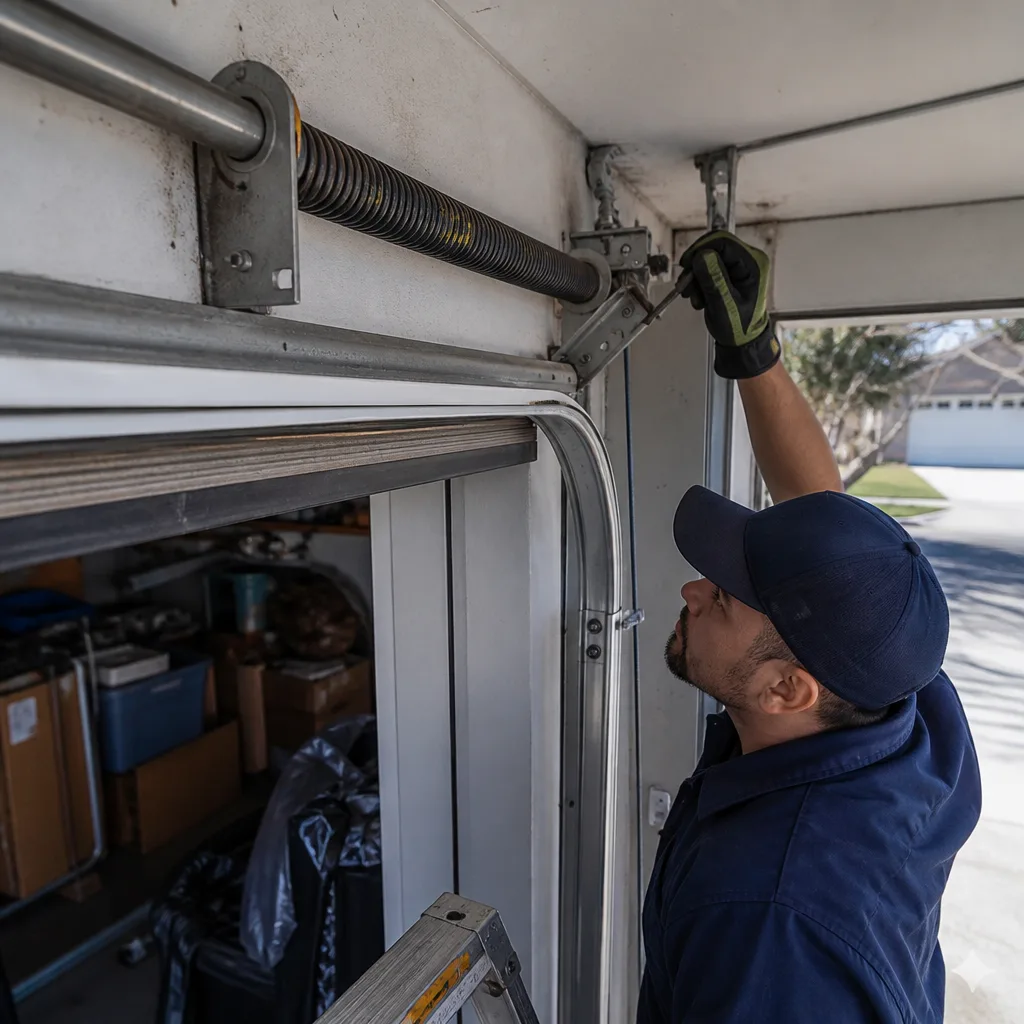 Before
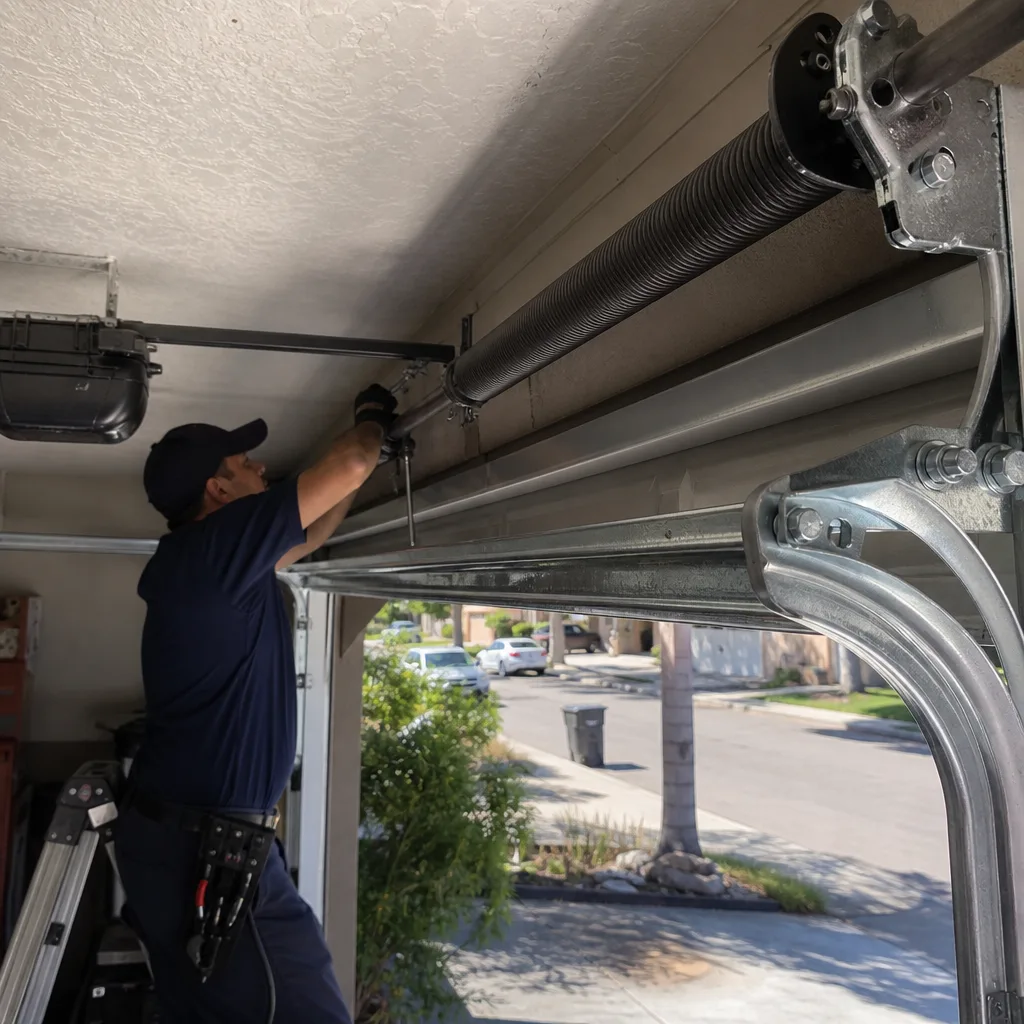 After
After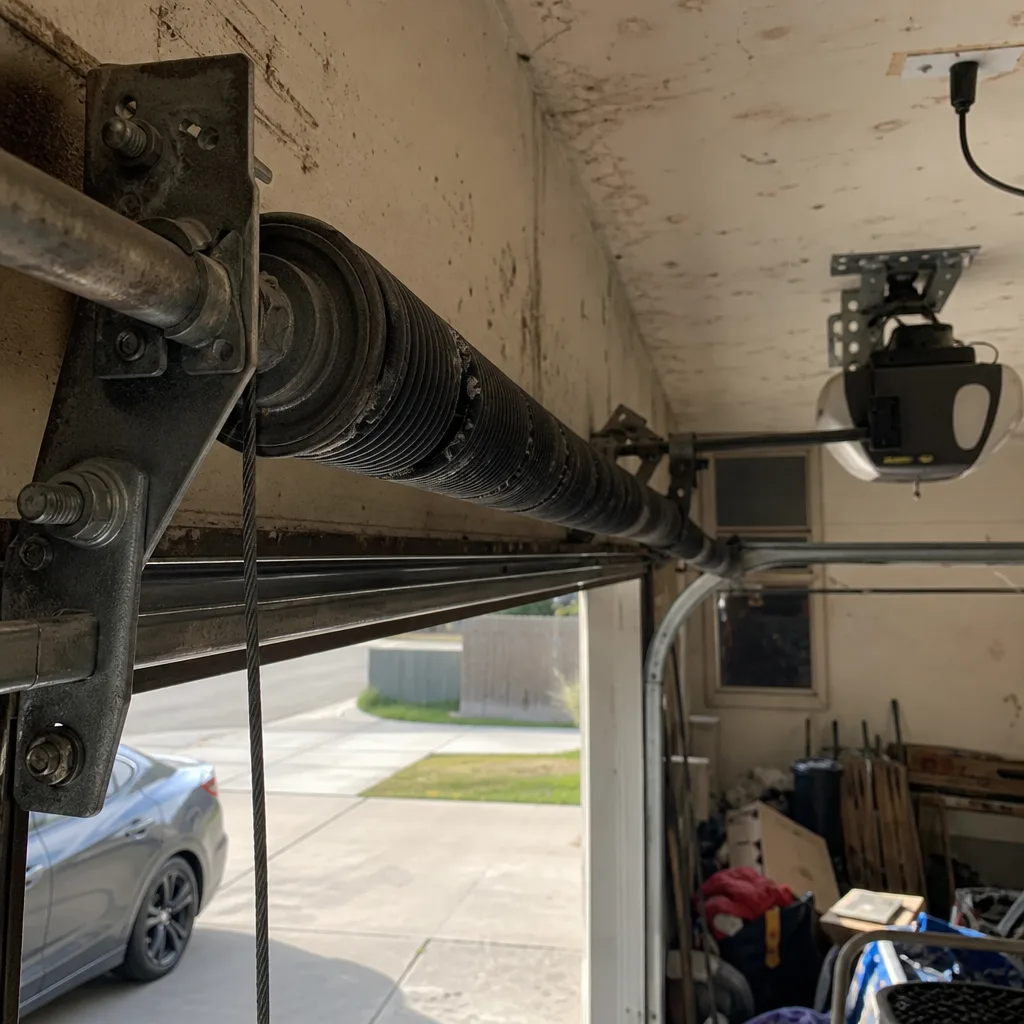 Before
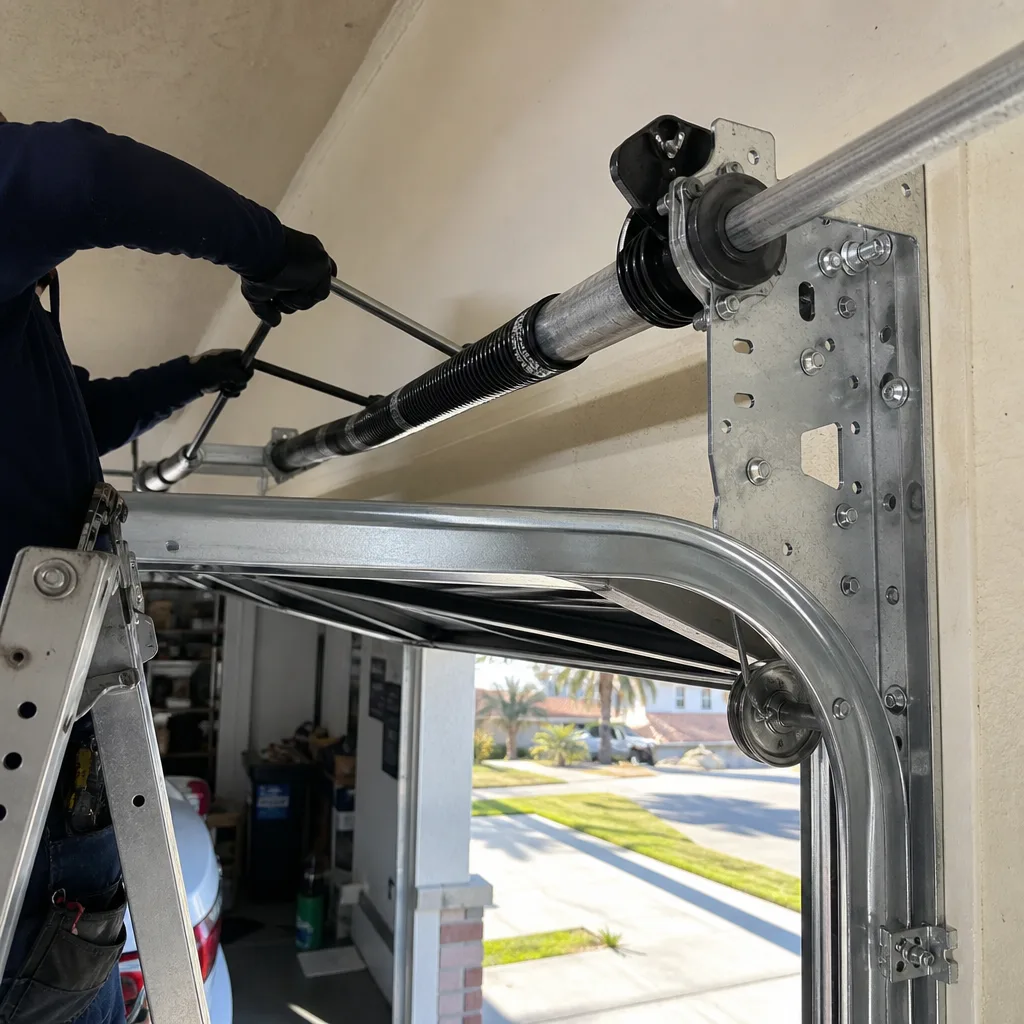 After
AfterSeasonal Garage Door Care for Fontana: Year-Round Homeowner’s Guide
Fontana hit 114°F in July 2021. That number matters for your garage door more than most homeowners realize, because it sits above the rated operating temperature for most standard torsion spring lubricants. When lubricant breaks down at that heat, spring coils grind against each other, and a spring that was fine in June can snap in September. Most seasonal maintenance guides are written for places with four real seasons. Fontana doesn’t have four seasons. It has a heat cycle that runs from May through October and a short, sharp temperature drop in January that contracts every piece of hardware on your door. This guide maps maintenance to that actual calendar, month by month, so you’re inspecting the right things at the right time. For a deeper dive, see The Complete Guide to Garage Door in Fontana. Written by a garage door company that has worked in Fontana since 2015, it covers what fails here, when it fails, and what to do before it does.
Quick Answer
Seasonal garage door care in Fontana means shifting your maintenance schedule away from the national spring-and-fall template and onto a heat-cycle calendar: lubricate and inspect in June before peak heat, do your highest-yield maintenance in October after heat-season wear, and run a focused cold-check in January when dropping temperatures contract hardware and expose bottom seal compression problems. The three tasks that prevent the most Fontana failures are lubricating torsion springs with a high-temperature silicone spray, checking roller and track wear after summer, and replacing a cracked bottom seal before January rains arrive.
Table of Contents
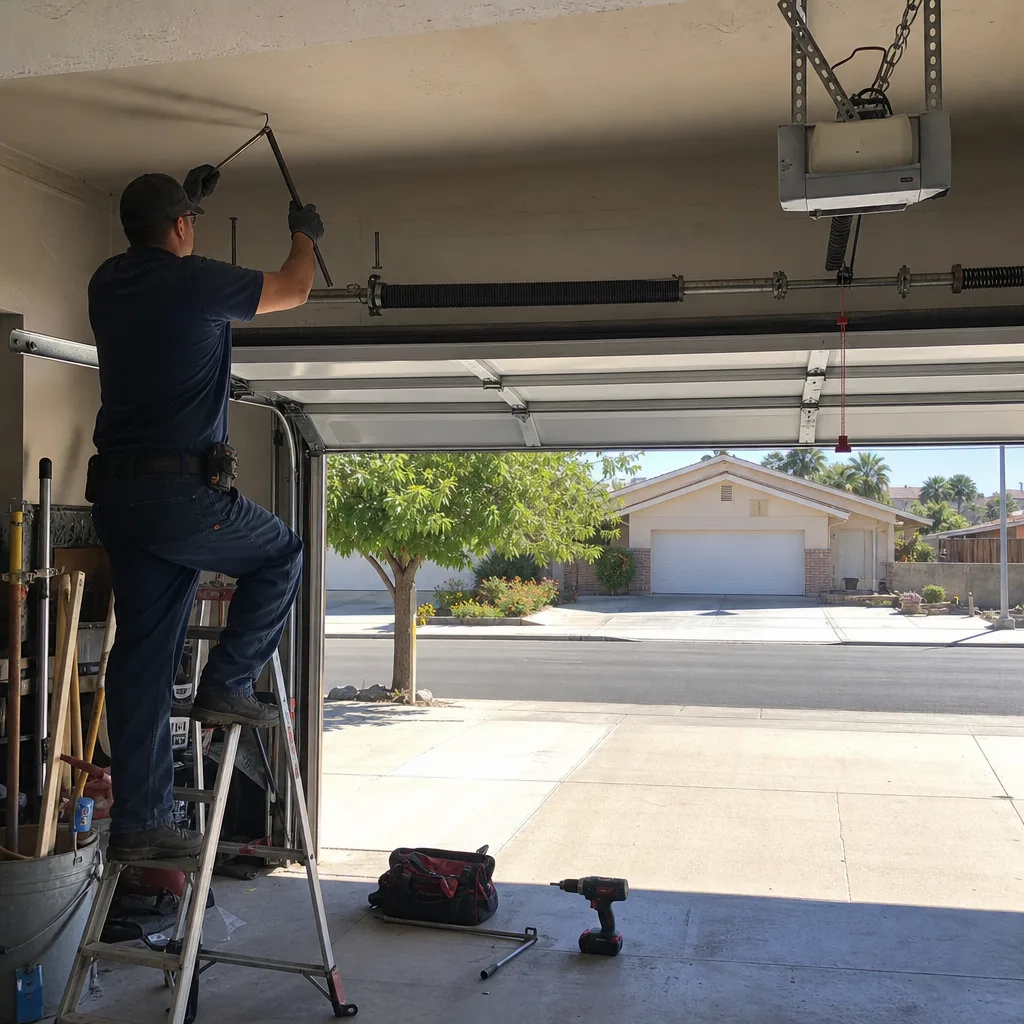
- Why Fontana’s Climate Breaks the Standard Maintenance Calendar
- May Through June: Pre-Heat Preparation
- July Through September: Peak Heat Monitoring
- October: The Highest-Yield Maintenance Month in Fontana
- November Through December: Pre-Cold Transition
- January: The Fontana Cold-Check
- February Through April: Recovery and Light Maintenance
- UV Degradation: What Fontana’s Sun Actually Does to Your Door
BeforeAfterWhy Fontana’s Climate Breaks the Standard Maintenance Calendar
Most garage door care guides tell you to do a spring tune-up in April and a fall tune-up in October. That template was written for places with snow, ice, and real temperature swings. Fontana is not one of those places. Our climate is defined by two patterns: a long heat season with average highs above 90°F from June through September, and a winter that rarely freezes but drops sharply enough overnight to contract metal components by a meaningful margin. The temperature swing between a 95°F afternoon and a 48°F January night puts repeated expansion-and-contraction stress on every metal-to-metal connection on your door: hinges, roller stems, track brackets, and spring coils. What fails in Fontana is rarely cold-weather seizure. It’s heat fatigue compounded by that January contraction.
Consider what this means for maintenance timing. If you lubricate your torsion springs in April, the heat of June, July, and August will degrade that lubricant before the door has cycled a hundred times. By September, you’re running springs with degraded lubrication at the exact moment the coils are under maximum thermal expansion. That’s why we see more spring failures in Fontana between late August and early October than any other window. The door doesn’t care that the calendar says “fall maintenance.” It cares that the lubricant is gone and the spring has been running hot for four months.
One more difference specific to inland Southern California: we don’t get the freeze-thaw cycle that wrecks bottom seals in colder climates, but we do get a compressed heat-and-dust pattern. Fontana’s dry air and Santa Ana winds carry fine particulate that settles into track grooves and roller bearings. That dust mixes with whatever lubricant is present and forms an abrasive paste. In our experience at Servo Garage Doors Fontana home, more than half the roller replacements we do in Fontana are caused by grit wear rather than age. The maintenance implication is simple: cleaning matters as much as lubricating, and it matters on a schedule tied to wind season, not to a generic calendar.
May Through June: Pre-Heat Preparation
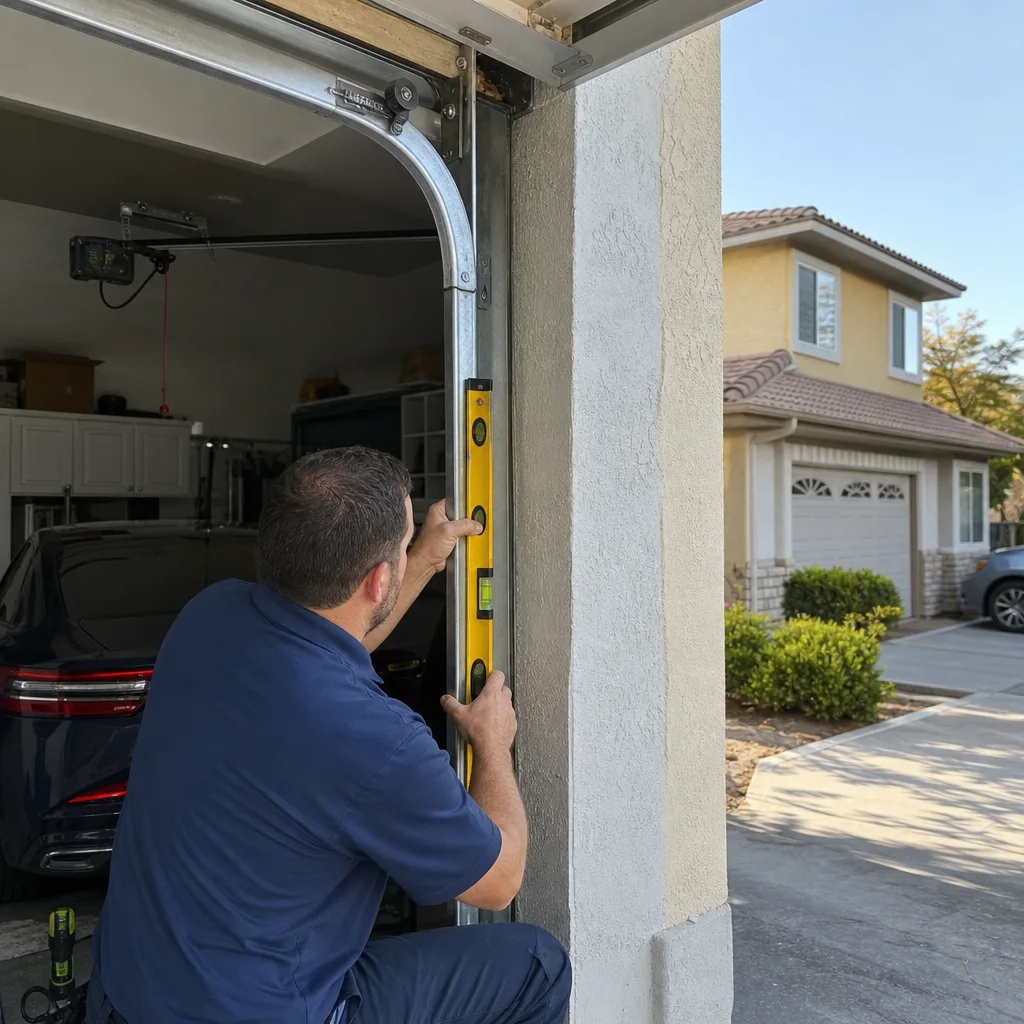
June is when you prepare the door for what July and August will do to it. The goal here is not a full tune-up; it’s to make sure the door enters peak heat with clean tracks, fresh high-temperature lubricant on the springs, and no pre-existing wear that heat will accelerate.
Here’s the order of operations we recommend for Fontana homeowners in late May or early June:
- Clean the tracks. Use a dry rag or a shop brush to remove dust from the vertical and horizontal track channels. Do not grease the tracks. Grease attracts Fontana’s wind-blown grit and creates the abrasive paste that destroys rollers. The track surface should be dry and clean.
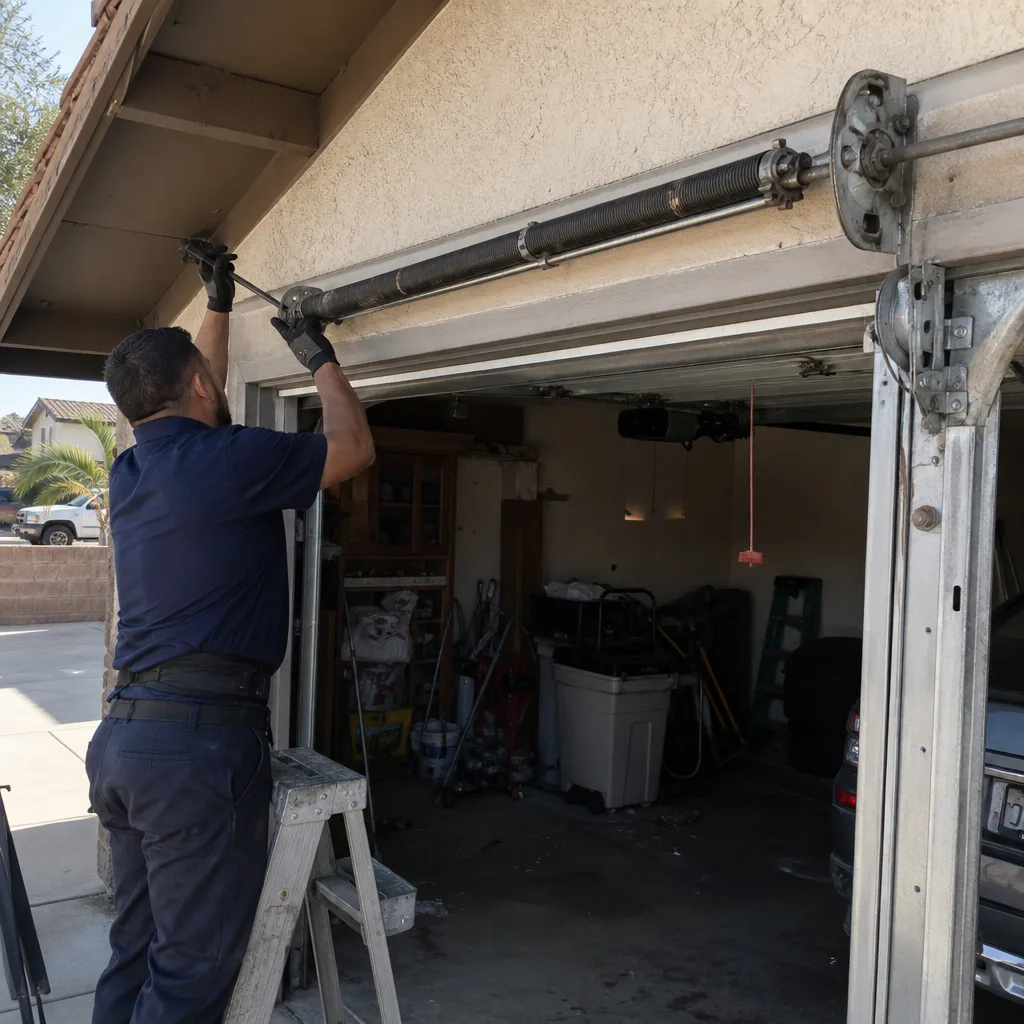
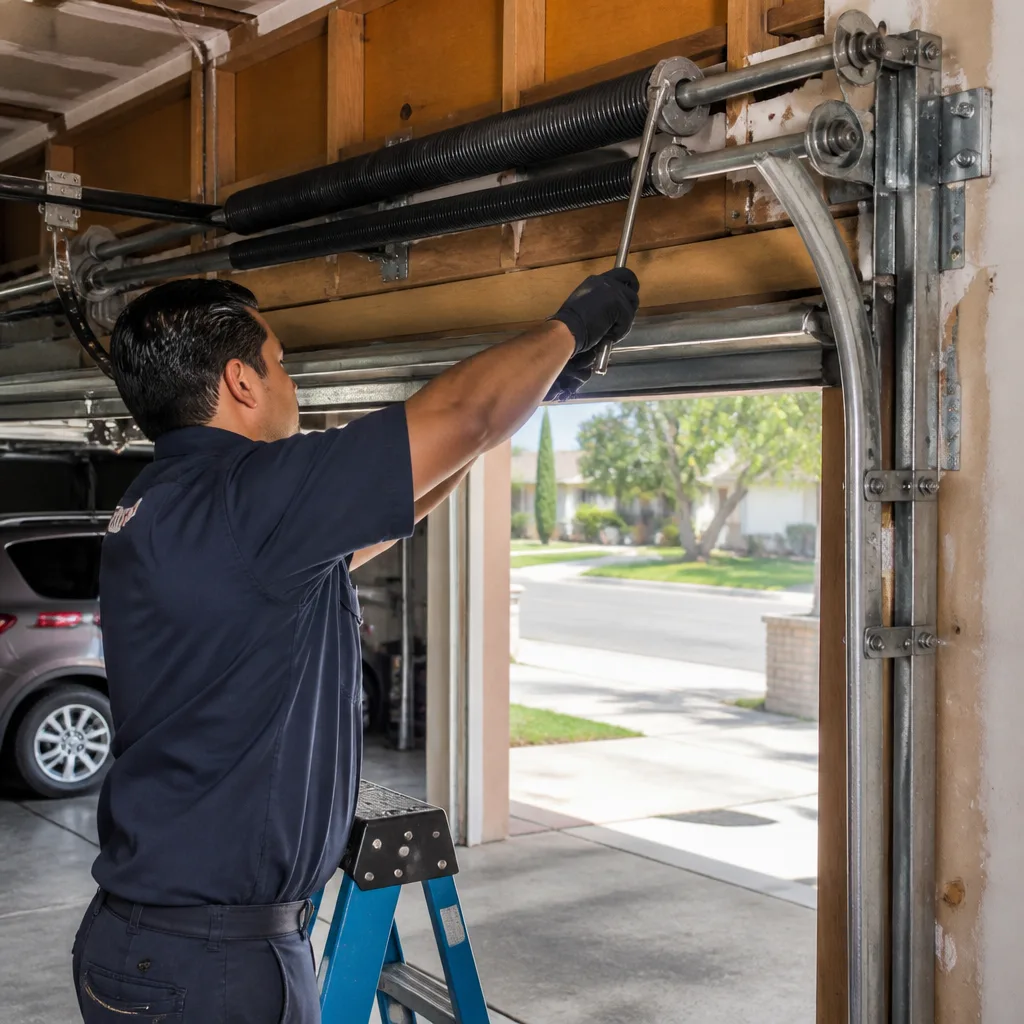
- Lubricate the torsion spring. This is the most important single task on the pre-heat list. The torsion spring is the coiled metal component mounted above the door opening. It stores the lifting force of the door. Use a high-temperature silicone-based garage door lubricant, not WD-40 and not grease. Spray the spring coils evenly while the door is closed. A high-temperature rating matters in Fontana because standard lubricants thin out and run off at sustained temperatures above 100°F.
- Lubricate hinges and roller stems. Each hinge point where the door sections pivot should receive a small amount of the same silicone spray. The roller stems, the metal shafts that hold each roller wheel, should also get a light application. Avoid spraying the roller wheels themselves; the lubricant can seep into the bearings and wash out the factory grease.
- Check the weather seal. Run your hand along the bottom seal, the rubber strip at the base of the door. June is when you want to find a crack or split, because a cracked seal in June becomes a wide gap by August, and by January it’s letting cold air and rodents in.
- Test the balance. Pull the emergency release cord (the red handle hanging from the opener rail) and manually lift the door to waist height. A balanced door stays in place without support. If it falls or rises on its own, the springs are losing tension and should be checked by a technician. Do not attempt to adjust torsion springs yourself; they are under high tension and can cause serious injury.
When we show up for a pre-heat maintenance call in Fontana, the most common finding is a door that hasn’t been lubricated in years. The second most common is a bottom seal that’s already compromised. Neither is a cause for alarm in June, but both are exactly the kind of thing that turns into a September emergency if left alone. The whole point of June maintenance is that it’s cheap and boring, and it keeps July and August uneventful.
If you’d rather have someone else do this inspection, Garage Door Repair in Fontana covers maintenance checks as well as repairs. The inspection includes the same documentation we provide on every service: photos of what was found, what was done, and a written record of the condition of each component. That record is how you know the work happened, rather than taking someone’s word for it.
July Through September: Peak Heat Monitoring
The months from July through September are when Fontana’s garage doors do the most work under the most hostile conditions. The door is not actually working harder in terms of cycle count, but every component on it is operating at temperatures that accelerate wear. The focus during this window shifts from preparation to observation.
Here’s what heat does to each component, and what to watch for:
- Torsion springs. Sustained heat accelerates metal fatigue. A spring that has already completed 10,000 cycles (roughly seven to ten years of normal use in a Fontana household) loses its rated tension faster in heat-season conditions. If your spring is older than seven years, July through September is its highest-risk window. Listen for a loud bang from the garage, which is the sound of a spring breaking under tension.
- Cables. The steel cables that run along each side of the door carry the spring’s tension to the bottom brackets. Heat doesn’t break cables directly, but it does thin the lubricant on the cable drums, which increases friction, which increases cable wear. A cable with visible fraying in July should be addressed before it snaps in October.
- Roller tracks. Metal expands in sustained heat. Fontana’s average July high of 96°F is enough to expand a steel track by a small but measurable margin. If the track is already slightly misaligned, that expansion can cause the door to bind or rub during operation. If you notice the door jerking or hesitating during July or August, track expansion is a likely culprit.
- Door panels. Direct afternoon sun on a west-facing garage door can raise the panel surface temperature well above ambient air temperature. For steel doors with a dark paint color, surface temperatures can exceed 150°F. This doesn’t typically cause panel failure, but it does stress the adhesive joints that hold insulation and panel backing in place on older doors.
During peak heat months, run the door through a full open-and-close cycle once a week and listen. A door that operates quietly in June and starts grinding in August is telling you something. Whether it’s a dry hinge, a worn roller, or a misaligned track, heat-season noise is an early warning that should not be ignored until October.
The heat also affects garage door openers. Most residential openers from LiftMaster and Chamberlain are rated for operation in environments up to roughly 120°F. A Fontana garage with poor ventilation can exceed that on a 110°F day, especially if the garage door faces west with no shade. When the opener’s motor overheats, the built-in thermal protection shuts it down mid-cycle. If your opener stops working on a hot afternoon and works again a few hours later, that’s thermal shutdown, not a broken opener. It’s a warning sign that the garage ventilation needs attention, not necessarily a sign that the opener needs replacement. That said, repeated thermal shutdowns do shorten the life of the opener’s motor and logic board. If it’s happening regularly, Garage Door Opener Repair & Installation in Fontana can assess whether the opener, the ventilation, or both need attention.
October: The Highest-Yield Maintenance Month in Fontana
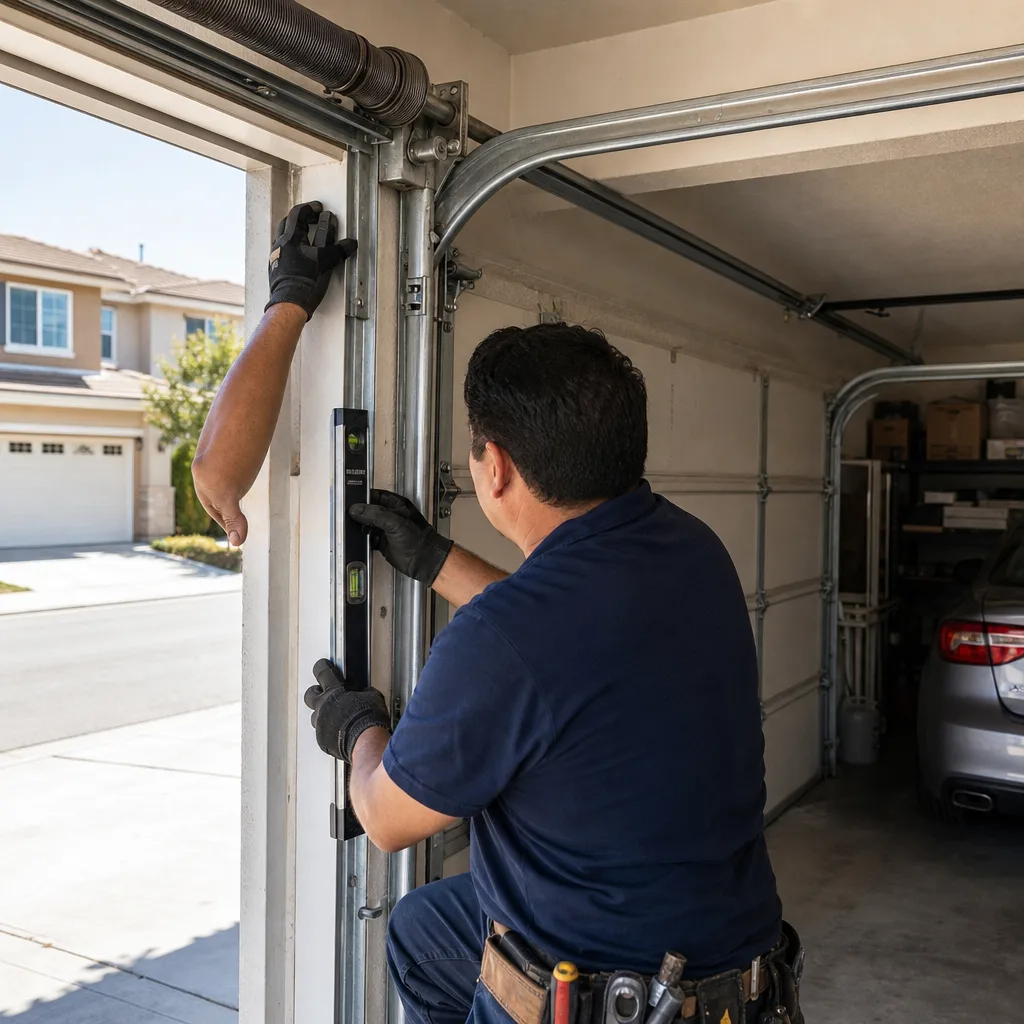
If you do one maintenance task per year in Fontana, do it in October. This is not the national fall-tune-up cliché applied to our climate. October is specifically the highest-yield month here because the door has just survived four months of heat fatigue, and it’s about to face a temperature differential that will stress already-fatigued hardware.
Between late September and late October, average daily high temperatures in Fontana drop from the mid-90s to the high-70s. Overnight lows drop from the mid-60s to the low-50s. That’s a 40-degree swing in six weeks. Every metal component on the door contracts during this transition, and whatever damage the heat season did gets exposed by that contraction. A spring coil with a hairline crack from summer fatigue will show that crack more clearly in October. A track that expanded and slightly shifted in July will seat differently when it contracts in October. A bottom seal that baked in the summer sun will be brittle enough to crack when temperatures drop and the seal compresses against the ground.
October maintenance is about catching heat-season damage before the cold differential turns it into a January failure. Here’s the full October inspection list we use on Fontana doors:
- Inspect the torsion spring visually. Look for gaps in the coil spacing, which indicate the spring has lost tension evenly. Look for a visible crack or break, which on a torsion spring typically means replacement. Springs do not get repaired; they get replaced when they fail.
- Inspect both lift cables. Look for fraying near the bottom bracket, where the cable attaches to the door. This is the highest-stress point. Any fraying means the cable is close to failure. A snapped cable while the door is open can send the door crashing down.
- Clean and lubricate everything you lubricated in June. Four months of heat has degraded the June lubricant. The springs, hinges, and roller stems all need a fresh application. This is the second lubrication pass of the year, and it’s the one that carries the door through the cooler months.
- Check the bottom seal for brittleness. Press on the seal with a finger. A healthy seal compresses and bounces back. A heat-damaged seal stays indented or cracks under pressure. If the seal is stiff or cracked, replace it before the winter rains start.
- Test the auto-reverse safety feature. Place a 2×4 piece of wood flat on the ground in the door’s path and close the door. The door should reverse within two seconds of contacting the wood. This is a federal safety requirement (UL 325) and it’s the most important safety check on the list.
- Check the photo-eye sensors. The small units mounted on each side of the door track, about six inches off the ground, should be aligned and free of dust. If either sensor’s light is blinking, the alignment is off. Most sensor issues are dust or alignment, and both are five-minute fixes.
The October pass is also the right time to assess whether your door is due for a larger repair cycle. Fontana doors that face west take the most sun and typically need rollers replaced every five to seven years and springs every seven to ten years. If you know the door was installed before 2017 and you’ve never replaced the rollers, October is the right time to have them inspected. Heat-season grit has done its worst by now, and roller replacement in October means smoother operation through the winter months when the door cycles less and has time to settle in.
November Through December: Pre-Cold Transition
November and December in Fontana are mild by national standards, with highs in the 60s and 70s and occasional rain. The maintenance focus in these months is less about active work and more about confirming that the October inspection caught everything before the January temperature drop.
The one task specific to this window is checking the weather seal after the first significant rain. Fontana’s rain typically arrives between late November and late December. A bottom seal that looked acceptable in October’s dry heat will reveal its true condition when the ground gets wet. If you see water seeping under the door after a rain, the seal is not making full contact with the ground. That means it’s either compressed from age, cracked from heat, or the door’s travel limit is set too high. A door that doesn’t close all the way leaves a gap that water, dust, and rodents all find.
November is also when we recommend checking the opener’s force settings. Most modern openers from LiftMaster, Chamberlain, and Genie have adjustable force controls that determine how much resistance the opener will push through before reversing. In the summer heat, some homeowners or previous technicians adjust force settings upward to overcome heat-related track expansion. When the door cools and the track contracts, that higher force setting becomes dangerous: it means the door will push harder before reversing, which defeats the auto-reverse safety feature. If you noticed the opener being adjusted during the summer, or if the door seems to push harder now than it did in the spring, have the force setting checked. This is a setting that should be correct year-round, not adjusted seasonally.
For doors with belt-drive openers, which most of the current Chamberlain and LiftMaster lines use, the cold months are when belt tension becomes noticeable. A belt that was quiet in September can develop a slight slap or vibration in December as the belt shrinks a fraction of an inch in cooler temperatures. This is normal and rarely requires adjustment, but if the noise is new and persistent, a quick belt tension inspection is worth doing in December rather than ignoring it through the winter. The same applies to chain-drive openers, though chain slap is more common than belt slap and more annoying. Craftsman and Raynor chain-drive openers are both common in Fontana garages, and both benefit from a chain tension check in late fall.
January: The Fontana Cold-Check
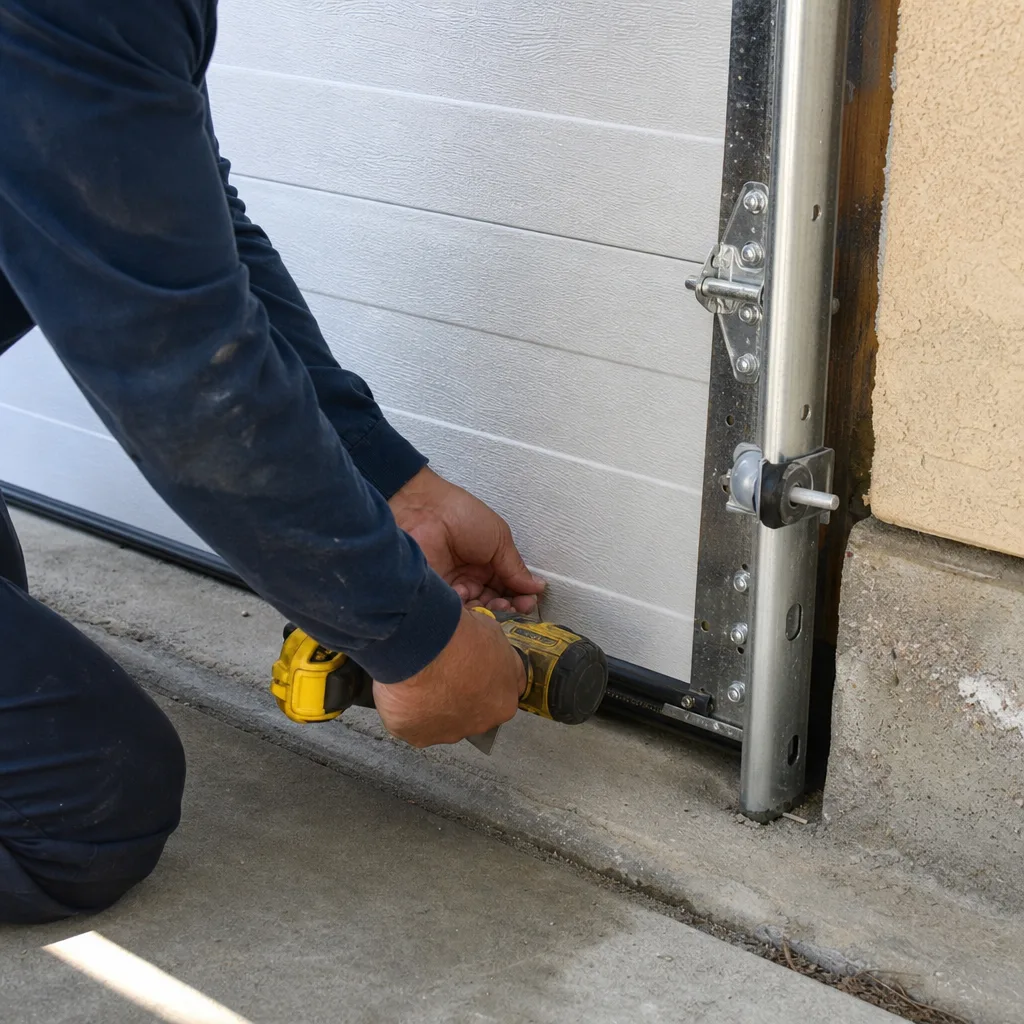
January is the one month where Fontana’s garage doors experience anything resembling cold-weather stress. Overnight temperatures regularly drop into the low 40s and occasionally into the 30s in the northern parts of the city near the foothills. That’s not cold by national standards, but it’s cold enough to contract metal hardware that has been running in 90-degree heat for half the year.
The January cold-check is a focused inspection, not a full maintenance pass. It takes about fifteen minutes and catches the specific issues that only appear when the door is cold. Here’s the list:
- Bottom seal compression. In cold weather, the rubber bottom seal stiffens and loses some of its ability to compress. A seal that reached the ground in October may not reach it in January. Check for daylight visible under the door when closed, and for cold air seeping in along the bottom edge. If the seal isn’t making contact, it needs replacement or the door travel limit needs adjustment.
- Track and roller noise. Cold contraction exposes any residual misalignment from the summer heat. If the door makes a grinding or scraping noise in January that wasn’t present in November, it’s likely a track that shifted during the heat season and is now binding in the cold. This usually requires track adjustment rather than replacement.
- Opener force settings. As covered in the November section, cold contraction means the door requires more force to move if the rollers or tracks are even slightly misaligned. If the opener reverses mid-cycle in January for no apparent reason, it may be encountering resistance from cold-contracted hardware. The fix is usually a track alignment, not a force setting adjustment. Overriding the force setting to keep the door moving is the wrong fix and a safety risk.
- Hinge and roller stem lubrication. The October lubrication pass should still be effective in January, but if the door has been through several rain cycles, grit may have worked its way into the hinge points. A quick visual check for dry or dirty hinges takes seconds and a reapplication takes less than a minute per hinge.
January is also the month when we get calls from Fontana homeowners whose garage door opener suddenly won’t work on a cold morning. In most cases, the opener is fine. The door itself has contracted slightly in the cold, and the opener’s safety system is refusing to operate because it senses more resistance than it’s rated for. The homeowner experiences this as “the opener broke overnight.” What actually happened is that the door was already marginal in October, and the cold pushed it past the point where the opener can safely move it. The fix is almost always a mechanical adjustment on the door, not an opener replacement. But if the opener has also been through five Fontana summers in an unventilated garage, it’s worth having the opener itself tested while the technician is there.
February Through April: Recovery and Light Maintenance
From February through April, Fontana’s temperatures climb gradually from the 60s back into the 80s. This is the lowest-stress period on the garage door calendar. The door is operating in moderate temperatures, the January contraction has eased, and the October lubrication is still doing its job. This is not a season for major maintenance, but it’s a good window for a few light tasks and for planning.
February is the right time to test everything that January questioned. If the door was noisy in January, does the noise go away when the temperature climbs back above 60°F? If it does, that confirms the noise was cold-contraction related and not a sign of serious wear. If it doesn’t, the issue is mechanical and should be addressed before the heat season starts. We’ve seen this pattern play out hundreds of times in Fontana: a door that’s noisy all winter long gets written off as “just a cold-weather thing,” then the owner discovers in June that a roller was actually worn and has now scratched the track.
March is a good month for door cleaning, which matters more in Fontana than in most places. Our dry air and Santa Ana winds deposit a fine layer of dust on everything, including garage door panels. On painted steel doors, that dust accelerates paint oxidation over time. A basic wash with mild soap and water, plus a rinse, extends the life of the finish measurably. This is also the right time to check the weatherstripping on the sides and top of the door opening. The side seals, called jamb seals, are often overlooked, and in Fontana they take direct afternoon sun on west-facing doors. A cracked jamb seal in March means wind-blown dust getting into the garage for the next six months.
April is the planning month. If you know the door is reaching the end of its service life, if the springs are seven-plus years old, or if you’ve been nursing a noisy roller for months, April is the right time to get a written evaluation and price. It’s before the heat season starts, it’s before the busiest emergency-call period for Fontana garage door companies, and it gives you the space to make a considered decision rather than reacting to a July failure. If you’re thinking about Garage Door Installation in Fontana, getting the details in April means the door can be ordered and scheduled for installation before the summer heat arrives.
UV Degradation: What Fontana’s Sun Actually Does to Your Door
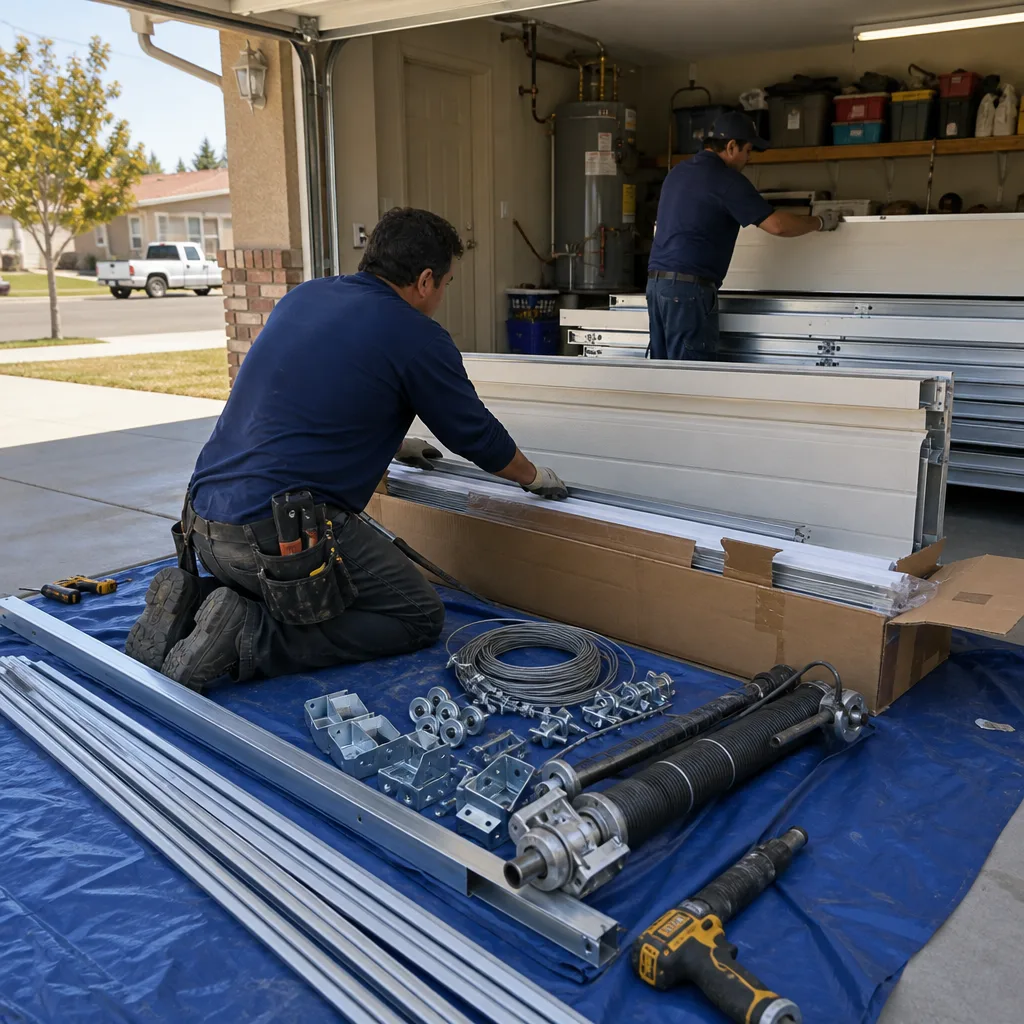
Fontana averages about 280 days of sunshine per year, with an average solar angle that puts intense direct UV radiation on any surface facing south or west. For a garage door, that radiation does two things: it degrades the polymers in rubber and vinyl components, and it accelerates the breakdown of paint and finish on the door panels.
The components most affected by UV degradation are the ones most homeowners never think about until they fail. The bottom seal, which is typically made of PVC or rubber, loses its flexibility as UV exposure breaks the polymer bonds. After five to seven years of Fontana sun, a bottom seal that started flexible becomes brittle and cracks. The jamb seals on the sides of the opening degrade on the same timeline. The vinyl trim and weather stripping around the door frame get the same treatment. And on doors with windows, the vinyl or rubber gaskets around the window frames dry out and shrink, which leads to rattling windows and eventually water intrusion.
The timeline for these failures is consistent enough that we can map it from experience. A west-facing door in Fontana will typically need its bottom seal replaced every five to seven years, its jamb seals every six to eight years, and its window gaskets inspected after year five. East-facing doors get three to five additional years out of the same components because they take morning sun rather than afternoon sun. South-facing doors fall in the middle. These are not exact schedules; they’re the averages we see in the field, and they’re useful for planning.
Paint and panel finish follow a similar degradation curve. A steel door with a factory finish will typically show visible sun fading after seven to ten years of Fontana exposure, sooner on west-facing doors. This is cosmetic and doesn’t affect function, but it does matter for home value and curb appeal. The practical takeaway is that if you’re painting a garage door in Fontana, use a paint rated for high-UV environments, and repaint on a schedule of every six to eight years rather than waiting for the finish to visibly fail. By the time it looks bad, the underlying metal has already been exposed to weather, and the next step is rust.
The one UV-related item that does affect function is the opener’s photo-eye sensor housing. On doors where the sensors sit in direct afternoon sun, the plastic housings become brittle over time. A brittle sensor housing cracks when bumped or when temperature cycles cause small expansions and contractions. A cracked housing lets dust into the sensor, which causes intermittent opener malfunction: the door reverses for no reason, or the opener refuses to close. If your opener has started acting erratically and the sensors have been in direct sun for years, the sensor housings are a likely culprit and the fix is simpler than most opener repairs.
Common Mistakes to Avoid
- Lubricating in April and calling it done for the year. In Fontana, April lubricant is cooked off by July. The door needs a second application in October to carry it through the cooler months. One application per year is a national-template habit that doesn’t match our heat cycle.
- Greasing the track. Grease on the track attracts Fontana’s wind-blown fine dust and forms an abrasive paste that destroys rollers faster than no lubricant at all. Tracks stay dry. Only the springs, hinges, and roller stems get lubrication.
- Using WD-40 as garage door lubricant. WD-40 is a solvent and water displacer, not a long-term lubricant. It strips existing lubricant and evaporates within days. Use a silicone-based garage door lubricant specifically rated for the task, ideally one with a high-temperature rating for Fontana summers.
- Ignoring a noisy door until it stops moving. A grinding or scraping noise in a Fontana garage door is almost always a mechanical issue announcing itself before failure. By the time the door stops moving, the repair is bigger and more expensive than it would have been at the noise stage.
- Adjusting the opener’s force setting to overcome a stiff door. This is the most dangerous mistake on the list. If the door is hard to move, it’s a mechanical problem with the door, not an electronic problem with the opener. Raising the force setting overrides the safety reversal and creates a door that will not reverse when it hits something. This violates the UL 325 safety standard and puts people at risk.
- Skipping the bottom seal inspection until water is visible on the garage floor. By the time water is coming in, the seal has been failing for months or years. The seal should be checked in June before heat season and again in October after it. A $25 seal replaced in October prevents a wet garage and the damage that follows.
- Assuming a cold-weather opener failure means the opener is broken. In January, most Fontana opener failures are actually door alignment issues exposed by cold contraction. Replacing the opener without fixing the door just means the new opener will fail the same way on the next cold morning.
When to Call a Professional
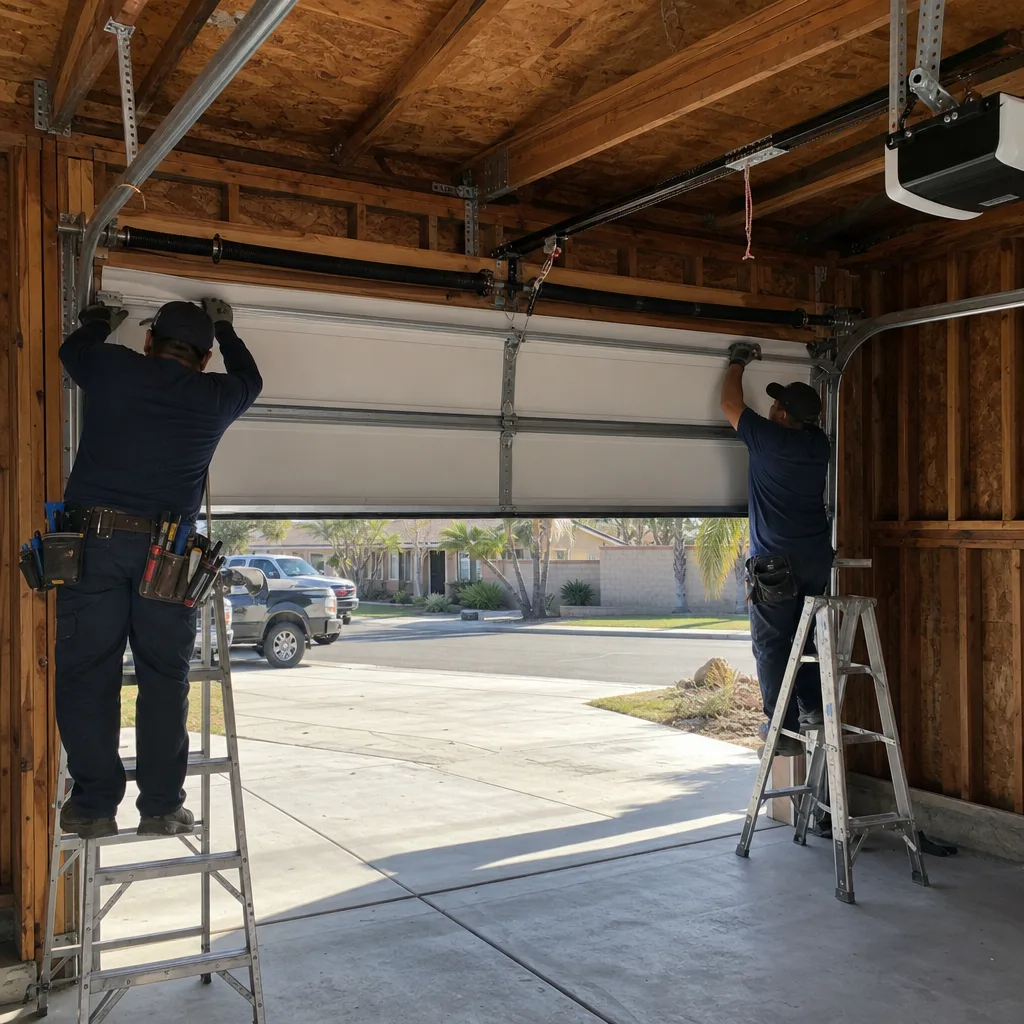
Some garage door tasks are homeowner-suitable: cleaning tracks, lubricating springs and hinges, checking the bottom seal, testing the auto-reverse. Other tasks are not. If you’re unsure which category your project falls into, read our DIY vs Professional Garage Door: The Fontana Homeowner’s Decision Guide. Any work involving the torsion spring is professional work. The spring holds enough tension to cause serious injury or death if it releases unexpectedly. Cables under tension are the same. If you see a frayed cable, do not touch it. If you hear a spring snap, do not operate the door. If the door is off its track or the track is visibly bent, do not attempt to straighten it by hand. Servo Garage Doors Fontana offers free estimates in Fontana, with a written price and written scope before any work starts. Call (951) 307-0747 and we’ll send a technician who will photograph what’s found before quoting anything.
Frequently Asked Questions
Twice a year in Fontana: once in June before peak heat and once in October after heat season. The summer heat degrades lubricant faster than the national average, so a once-a-year schedule leaves the door running dry during the hottest months. Use a silicone-based garage door lubricant with a high-temperature rating, and apply it to the torsion spring coils, hinge points, and roller stems only. Tracks stay dry. Call (951) 307-0747 if you’d rather have this done as part of a professional maintenance check.
October is the highest-yield maintenance month in Fontana. By October, the door has survived four months of 90-plus-degree heat, and the temperature is about to drop sharply enough to contract every metal component. The October inspection catches heat-season fatigue before the cold differential stresses it further. This is also the month when heat-season spring failures peak, so an October inspection is the best insurance against a January emergency.
Yes. Sustained heat above 100°F accelerates metal fatigue in torsion springs and degrades the lubricant that protects the coils from grinding against each other. A spring that has already completed 7,000 to 10,000 cycles is at measurably higher risk of failure during Fontana’s peak heat months from July through September. That’s why the June lubrication pass matters: a properly lubricated spring survives the heat season with far less damage than a dry one.
In Fontana, cold-weather opener failures are almost always caused by door alignment issues that the cold temperature exposes. When metal track and hardware contract in January cold snaps, a door that was marginal in October becomes harder to move. The opener senses the increased resistance and either reverses mid-cycle or refuses to operate. The fix is usually a track adjustment on the door, not an opener replacement. If it happens repeatedly, have both the door and opener inspected. Call (951) 307-0747 for a written evaluation.
Typically five to seven years on a west-facing door in Fontana, and longer on east-facing or shaded doors. The combination of summer heat and direct UV radiation makes the rubber brittle, and January’s cold snaps then crack the brittle material. You’ll know it’s failing when the seal looks cracked, feels stiff when pressed, or when daylight is visible under the closed door. Replacement is inexpensive and takes less than an hour.
Yes, lubricating a torsion spring is safe if you follow basic precautions: use a spray lubricant with an extension nozzle, keep your hands and face away from the spring coils while spraying, and never touch the spring itself. The spring is under high tension, and while spraying lubricant on it is safe, any attempt to adjust, replace, or disassemble the spring is not. Those are professional jobs, and the technician should show you the failed component before quoting a replacement.
The Bottom Line
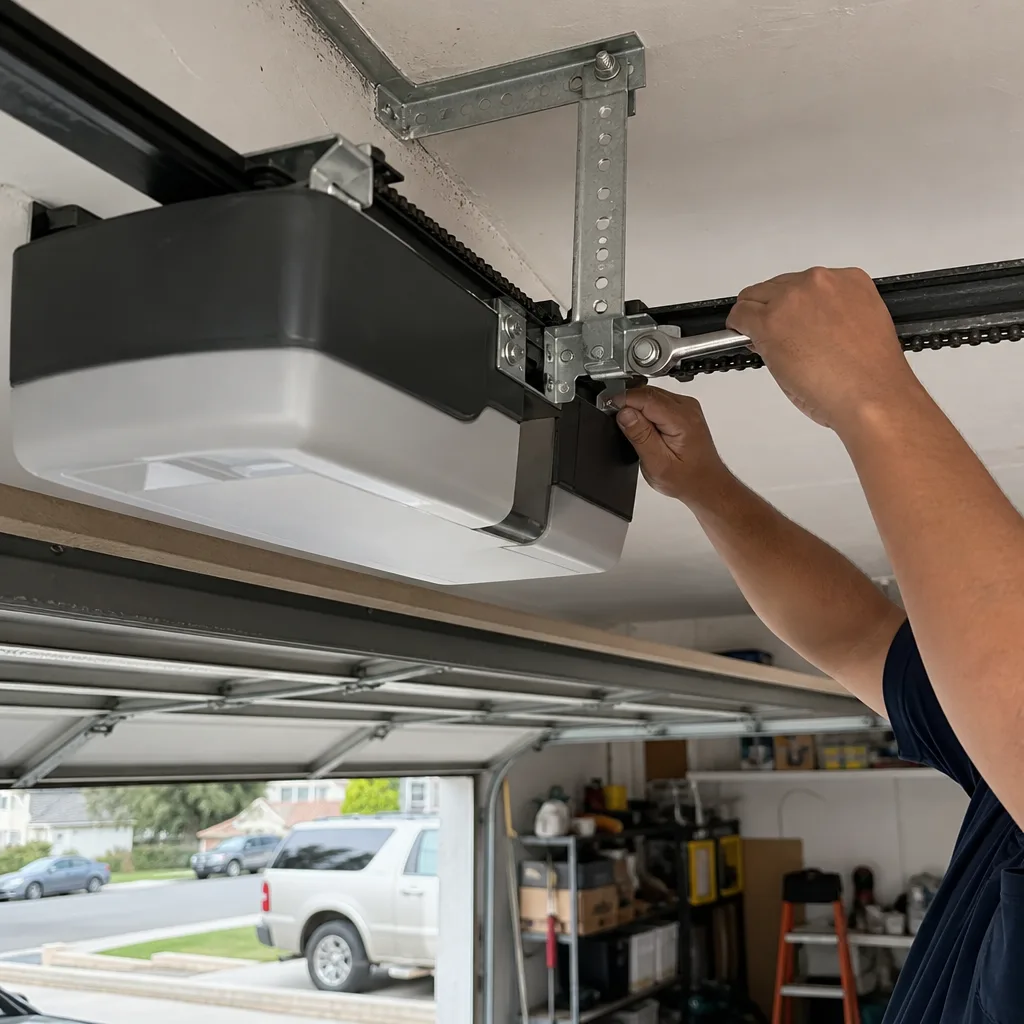
Fontana’s garage doors don’t fail on a national maintenance schedule. They fail on a heat-cycle schedule, and the maintenance calendar in this guide maps directly to that cycle. Lubricate in June. Monitor in July, August, and September. Do your real maintenance in October. Check the cold-specific issues in January. Clean and plan in February through April. That’s the whole system, and it’s built around the specific temperatures, sun exposure, and dust that define garage door wear in this city. The parts are not expensive, and the tasks are mostly simple. What keeps a Fontana garage door running for fifteen years instead of seven is doing the right task at the right month, every year, without skipping the October pass.
Written by Marcus Deller, Owner at Servo Garage Doors Fontana, serving Fontana since 2015.
Need a professional inspection or repair? Call (951) 307-0747 for a free estimate in Fontana, or browse more guides & resources on garage door care. We provide a flat, written price and written scope before any work begins, a documented photo record when the job is done, and a 365-Day Done Right Promise on every repair. Our technicians service all major brands including LiftMaster, Chamberlain, Genie, Clopay, Amarr, Wayne Dalton, Craftsman, and Raynor.